
Indian Education Marketing Stats 2026 Every Institute Owner Must Know
- Real Data on Student Search Behaviour
- SEO, PPC and Social — What Actually Works
- Where to Invest Your Marketing Budget
- How AI Is Changing Education Marketing
- Why Digital Budgets Are Increasing Fast
- How Institutes Compete in 2026 Market
- ROI Benchmarks for Education Marketing
Request a Quote
Indian Education Marketing Statistics Report 2026: SEO, PPC, AI, Lead Generation & ROI Trends
India’s education market is projected to reach Rs. 26,94,617 crore (US$ 313 billion) by FY30 — one of the largest education market opportunities in the world.
With students and parents now researching institutions online before making any admission decision, digital marketing has become the most critical investment for educational institutions today — whether you run a coaching institute, skill training centre, tuition centre, school, college, EdTech platform, or any other specialised education service.
This Indian education marketing statistics 2026 report brings together the most relevant data across SEO, PPC, social media, AI, lead generation, and ROI — so you can see exactly how digital marketing for the education sector is shaping student acquisition across India right now.
Whether you are a coaching institute owner, school administrator, college marketing head, or EdTech brand, the education industry marketing statistics in this report will help you understand where students are searching, which channels deliver the best admissions results, and how to make smarter, more cost-effective marketing decisions in 2026-27.
Disclaimer: All statistics and data in this report are sourced from trusted industry publications, official government datasets, and recognised research organisations. We have selected the most relevant and up-to-date figures available. Numbers may vary slightly depending on source methodology and update cycles.
Table of Contents
Overview of India's Education Market in 2026
According to IMARC Group, India’s education market is projected to reach Rs. 26,94,617 crore (US$ 313 billion) by FY30 — and the country has already emerged as the second-largest e-learning market in the world, right after the United States. For any institution investing in digital marketing for education, this scale represents an enormous and still-growing opportunity.
A big part of this growth comes down to one simple fact: India has the largest youth population on the planet in the 5–24 age group, with nearly 580 million people.
Every coaching institute, tuition centre, school, and college in India is ultimately competing for the attention of this single, massive student audience — and increasingly, that competition is playing out online.
To understand just how large India’s education system already is, here are the latest figures from the Ministry of Education and UDISE+ data:
- 24.8 crore students enrolled in India’s school education system
- 14.72 lakh schools operating across the country
- 98 lakh teachers supporting school education nationwide
These numbers make India one of the largest school education systems in the world. And within this ecosystem, every institution — from a single-classroom tuition centre in a Tier 3 city to a multi-city coaching chain — is now competing for students who search online first and enquire later.
This is exactly why student enrollment marketing and digital visibility have become non-negotiable for education brands of every size.
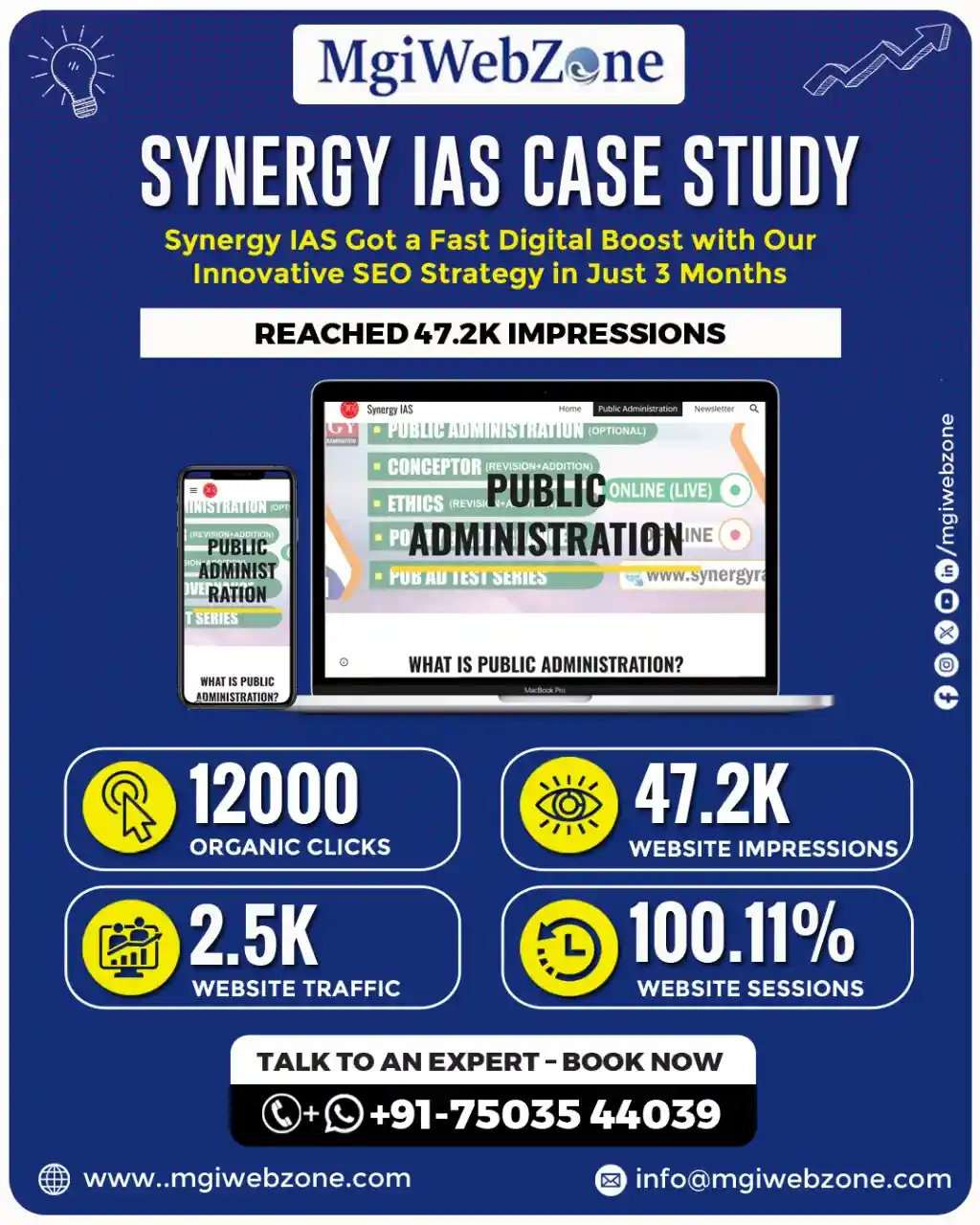
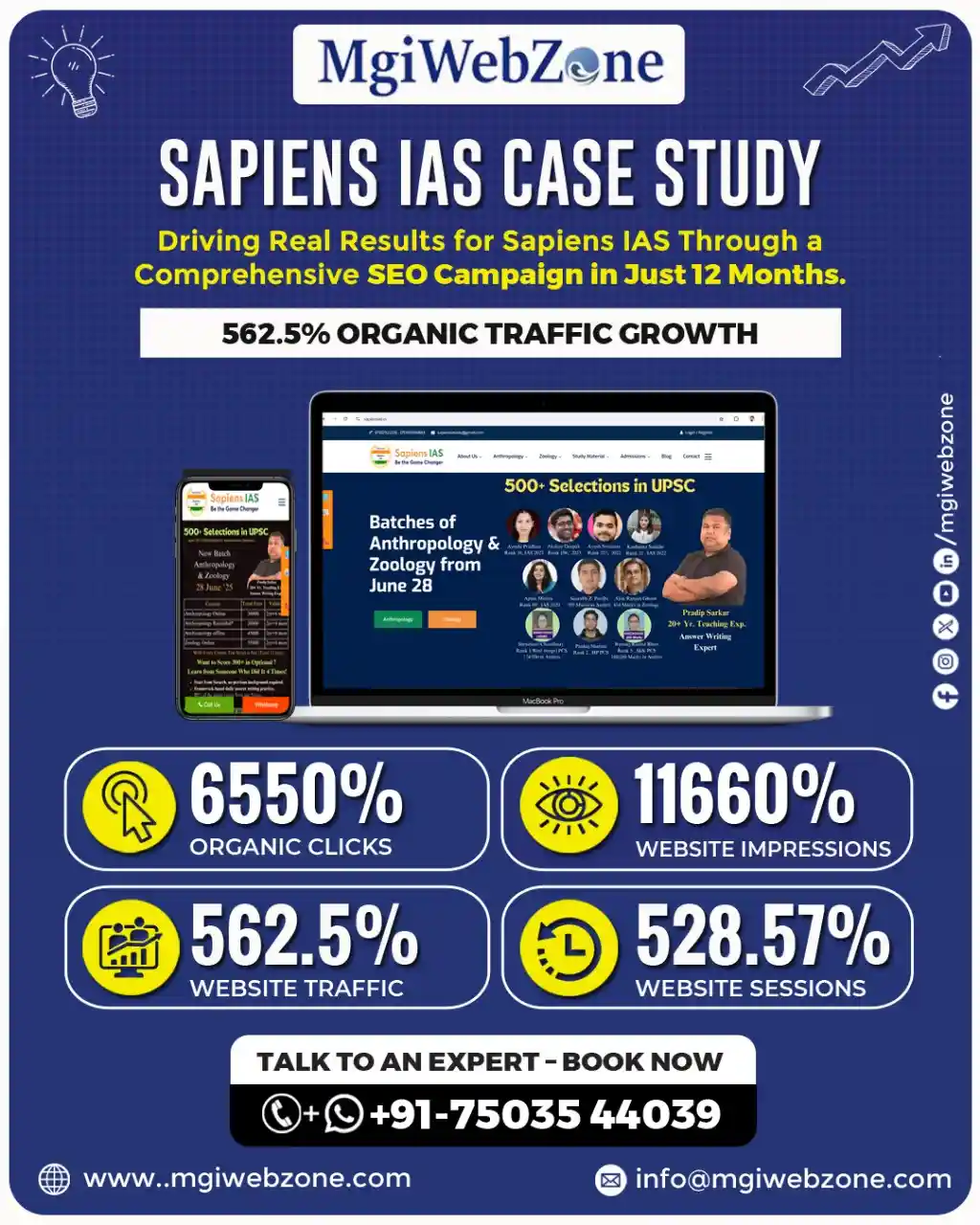
Data-driven Digital Marketing Results for UPSC/IAS Coaching Institutes
Government vs Private Schools in India: What the 2026 Data Tells Us
India’s school system is divided between government and private institutions — and this divide has a direct impact on how education marketing works across different geographies and student segments.
Private schools are growing rapidly in urban areas and actively competing for students, while government schools continue to serve the majority of India’s student population, particularly in smaller towns, semi-urban areas, and villages.
Category | Government Schools | Private Schools |
Share of Total Schools | 69% | 22.5% |
Student Enrollment | 50% | 32.6% |
Share of Teachers | 51% | 38% |
Primary Role | Mass access to education | Quality-focused education |
Key Presence | Rural and semi-urban areas | Urban and semi-urban areas |
Affordability | Free or low-cost | Moderate to high fees |
Infrastructure | Basic to moderate | Advanced in most cases |
Medium of Instruction | Mostly regional languages | English and regional languages |
Growth Trend | Stable | Rapid growth |
Note: Government and private schools together account for approximately 91.5% of total schools. The remaining share includes aided, unaided, and other recognised school categories.
What This Means for Education Marketing in India
This government-private split tells us something very important about where the real marketing opportunity lies. Private schools — growing fast in urban and semi-urban areas — are investing in digital visibility, paid advertising, and online reputation management to attract fee-paying families.
For these institutions, digital marketing for private schools is no longer a luxury — it is a competitive necessity.
At the same time, government school families in Tier 2 and Tier 3 cities represent a massive untapped audience for coaching institutes, tuition centres, and skill development programmes.
These parents are increasingly going online — often on mobile — to find supplementary education options for their children. Reaching them requires a smart combination of local SEO for coaching institutes, regional language content, and targeted Google Ads for tuition centres and skill training programmes.
Key Takeaway
India’s school system is large, diverse, and spread across very different geographies and income segments. Whether your institution serves urban private school students or semi-urban government school families, a well-targeted digital marketing strategy for educational institutions is the most reliable way to reach the right students, in the right city, at the right time.
Find Out How Many Students Are Already Searching for Your Coaching Institute
Get a free visibility check. No commitment. Just clarity.
How Digital Marketing is Reshaping Student Enrollment in India (2026)
As India’s education sector moves into 2026-27, the way students and parents find and choose institutions has fundamentally changed.
Today, before a parent picks up the phone or a student walks into an enquiry office, they have already spent time researching online — comparing institutes, reading reviews, watching videos, and forming opinions about where they want to study.
This is not a trend that is just beginning. It is already the default behaviour for the majority of students across India’s cities, towns, and even smaller markets.
- Over 80% of online college students visited institution websites while researching their options before making a decision. (EducationDynamics)
- 78% of prospective students research their college and course choices online before enrolling. (RNL — Ruffalo Noel Levitz)
- Nearly 62% of student enrollment journeys now begin online — through Google Search, social media platforms, or directly on an institution’s website. (Meritto)
- 47% of graduate enrollment leads now come from digital advertising or organic search — meaning almost half of all admissions are being driven purely by online channels. (RNL)
This shift is not limited to colleges and universities. Coaching institutes, tuition centres, skill training programmes, and schools across India are all seeing the same pattern — students and parents search first, then decide.
Platforms like Google Search, Meta Ads, and YouTube have become the primary spaces where education institutions now compete for student attention.
Institutes that show up consistently and professionally across these platforms are the ones filling their batches every season.
Those still depending only on word of mouth, pamphlets, or newspaper ads are finding it harder each year to maintain the same admission numbers.
For institutions looking to stay ahead, investing in SEO services for educational institutions, Google Ads for coaching institutes, and social media marketing for schools and colleges is no longer a future plan — it is a present-day requirement.
Did You Know?
Nearly 62% of student enrollment journeys now begin online. If a student searches for a coaching institute, tuition centre, or school in your city and cannot find you easily, they will simply move on to one they can.
Digital visibility is no longer optional — it is the very starting point of every admission journey.
Your Coaching Niche Has a Market. Let's Make Sure Students Can Find You.
MgiWebzone builds AI-ready SEO strategies specifically for UPSC coaching institutes.
Digital Marketing Statistics for India's Education Sector (2026)
India’s education industry is growing fast — and digital is the engine driving that growth. Affordable internet, widespread smartphone adoption, and a young population that lives online have permanently changed how students discover and choose institutions.
Educational institutions that understand this shift are pulling ahead every admission season. Those that don’t are quietly losing ground.
This is why institutions of every size and type — from large coaching chains to small neighbourhood tuition centres — are now investing seriously in online marketing for educational institutions:
- To show up when students and parents search for courses and institutes online
- To build trust and reputation before a student ever makes an enquiry
- To stay competitive in cities and towns where every institute is fighting for the same student pool
- To generate a steady, predictable flow of admissions — not just seasonal spikes
- To engage parents and students effectively across multiple digital touchpoints
- To get the best possible return from every rupee spent on marketing
Most Impactful Education Marketing Statistics for 2026
- India’s education market is projected to reach Rs. 26,94,617 crore (US$ 313 billion) by FY30, while the online education segment alone is expected to reach Rs. 2,50,850 crore (US$ 29 billion) by 2030. (IBEF)
- 70% of online college students began their institution search by visiting a college or institute website — most of which they discovered through a Google search. (EducationDynamics)
- Nearly 62% of student enrollment journeys now begin online, either through Google Search or social media platforms. (Meritto)
- 47% of graduate enrollment leads now come from digital advertising or SEO and organic search — almost half of all admissions at the graduate level are now driven by online channels alone. (RNL — Ruffalo Noel Levitz)
- 81.9% of Gen Z students said they would consider online courses in the future, based on their previous experience with online education. (Penn Foster)
- 41% of college students say e-learning is more effective than traditional classroom teaching — a clear signal that digital-first education is not just a marketing trend but a genuine student preference. (Statista)
For coaching institutes, schools, and colleges looking to tap into this shift, a well-planned digital marketing strategy for educational institutions — combining SEO, paid advertising, content marketing, and social media — is the most reliable path to consistent admissions growth.
Key Takeaway
Nearly half of all graduate enrollment leads now come from digital channels, and 62% of student enrollment journeys begin online. For every coaching institute, tuition centre, school, and college in India, this data points to one clear conclusion: institutions that invest in SEO, PPC, and social media marketing today will be the ones filling seats tomorrow.
Those that don’t will find themselves increasingly invisible to the very students they are trying to reach.
Discover How Our Expert Solutions Can Elevate Your Online Presence
- Boost Online Visibility Fast
- Get More Quality Leads
- Rank Higher on Google
SEO Statistics for the Education Industry in India (2026)
When a student or parent wants to find the best coaching institute, tuition centre, or school in their city, the first thing they do is open Google.
This one simple behaviour is why SEO for educational institutions has become one of the most valuable long-term investments any education brand can make in India today.
A well-executed SEO strategy for coaching institutes and schools ensures your institution appears not just on Google Search, but also on Google Maps, AI Overviews, and AI platforms like ChatGPT, Gemini, and Perplexity — covering every place where students are now actively looking for information.
- The Indian SEO market is projected to reach approximately USD 8.1 billion by 2030, growing at a CAGR of 18.2% — reflecting just how central search visibility has become for businesses across every sector, including education. (Grand View Research)
- 84% of higher education marketers consider SEO a core part of their marketing strategy — but only 47% have an established AI-focused SEO approach in place. This gap is a real opportunity for institutions that move quickly. (Search Influence)
- 72% of parents and students check Google reviews before choosing a coaching institute, tuition centre, school, or college. Online reputation is now as important as offline word of mouth — and it starts with your Google presence. (Guaranteed Removals)
- Google holds over 90% of the worldwide search engine market share. Bing sits at under 3%, and Yahoo!, Yandex, and Baidu each account for roughly 1%. For any education institution in India, Google is not just one channel — it is the channel. (Statcounter / Semrush)
- According to Semrush, nearly 74% of education-related searches are informational — meaning students are not immediately searching to enrol. They are researching, comparing, and evaluating.
This is why content-led SEO for coaching institutes — blogs, FAQs, course guides, and career outcome pages — is so effective at building trust before a student ever makes an enquiry.
- The #1 result on Google gets approximately 27.6% of all clicks. The second result gets around 18.7%. By the time you reach position 5, click share drops below 7%. For education institutions, ranking on page one is not just about visibility — it is directly tied to how many enquiries you receive every month. (Backlinko)
- More than 70% of students begin their education research on Google — comparing institutions, exploring courses, reading reviews, and forming opinions before making any admission decision.
- 53% of a typical university or institution website’s traffic comes from organic search. This means more than half of all students discover coaching institutes, tuition centres, schools, colleges, EdTech platforms, and training centres directly through Google — without any paid advertising involved. (Semrush)
- A well-planned SEO strategy for education institutions can increase qualified leads by up to 200% — making organic search one of the highest-ROI marketing investments available to any education brand. (Education for All in India)
- 79% of Gen Z students in India use Google and YouTube on a daily basis — making these two platforms the most important digital touchpoints for any institution trying to reach young students consistently. (Google India)
Key Takeaway
SEO drives more than half of all traffic to education websites — and it does so without ongoing ad spend.
For coaching institutes, schools, tuition centres, and colleges across India, investing in professional SEO services for educational institutions is the single most cost-effective way to generate a steady, long-term flow of student enquiries.
Institutions that rank on page one of Google today will continue to receive admissions at near-zero cost per lead for months and years to come.
Tired of paying for ad traffic that never enquires?
- Boost Online Visibility Fast
- Get More Quality Leads
- Rank Higher on Google
- List Item
Google Business Profile (GBP) for Education Institutions: Why Local SEO Starts Here
When a parent types “best coaching institute near me” or “tuition centre in [city name]” into Google, the first thing they see is not a website — it is a Google Business Profile.
This is why Google Business Profile optimisation for educational institutions has become one of the most important and most underused tools in education marketing today.
A complete, well-optimised GBP listing puts your institute directly in front of local students and parents at the exact moment they are searching. It costs nothing to set up — but the difference between an optimised and an unoptimised listing is significant.
GBP Signal | Impact |
Growth in “near me” searches | Over 200% increase |
GBP interactions leading to website visits | 50%+ |
Revenue boost from adding photos to listing | 17% more per visitor |
Extra clicks: complete vs incomplete listing | 7x more clicks |
What this data tells us is straightforward. If your coaching institute, school, or tuition centre does not have a fully completed and regularly updated Google Business Profile, you are leaving a significant number of enquiries on the table — enquiries that are going directly to competitors who have taken the time to optimise their listing.
A strong local SEO strategy for coaching institutes always starts with GBP. From there, it builds outward into Google Maps rankings, location-based keyword targeting, and review management — all of which directly influence how many local students find and contact your institution.
For education institutions in Delhi, Noida, Mumbai, Bengaluru, and other competitive cities, local SEO services for schools and coaching institutes that include GBP optimisation can make the difference between appearing in the top three local results and not appearing at all.
Key Takeaway
Over 200% growth in “near me” searches means local students are actively looking for institutions like yours — right now, in your city.
A properly optimised Google Business Profile combined with a strong local SEO strategy ensures they find you first, not your competitor.
PPC Advertising Statistics for the Education Industry in India (2026)
When a student searches for “best UPSC coaching in Delhi” or “NEET crash course near me,” they are ready to enquire — they just need to find the right institute first.
This is exactly where PPC advertising for educational institutions delivers results that no other channel can match. Unlike SEO, which builds over months, a well-run Google Ads campaign for coaching institutes puts your institution in front of high-intent students the same day it goes live.
That said, PPC costs in the education sector are rising. Without smart targeting, institutions end up paying for clicks that never convert.
The difference between a profitable campaign and a money-draining one comes down entirely to strategy.
- Among PPC marketers worldwide, Google (98%), Facebook (76%), and Instagram (70%) are the most widely used advertising platforms — and for good reason.
These three platforms together cover virtually every stage of a student’s decision journey. (Statista)
- Educational institutions in India are expected to spend an estimated $8 billion to $10 billion on digital advertising in 2026, with metro cities like Delhi, Noida, and Mumbai leading adoption.
India’s digital education market is projected to grow by nearly 150% by 2026 — making this one of the most competitive digital advertising landscapes in the world. (Daily Excelsior)
- PPC advertising delivers an average return on investment of 200% across industries — and in education, where admission searches are highly seasonal and intent-driven, this ROI can go even higher with properly optimised campaigns. (SmallBizGenius / HubSpot)
- According to Google’s own Economic Impact data, businesses earn $2 in revenue for every $1 spent on Google Ads on average.
For education institutions running campaigns during peak admission seasons — January to March and June to August — this ratio improves significantly when campaigns are targeted correctly. (Google Economic Impact)
- The average Google Ads CPC in the education sector in India typically ranges between ₹40 and ₹60, depending on competition, course category, location, and keyword intent.
Highly competitive keywords in cities like Delhi and Mumbai can go higher during peak admission periods.
Most institutions overpay because they target broad, high-competition keywords without a clear negative keyword strategy or geo-targeting plan.
At MgiWebzone, our Google Ads service for coaching institutes and educational institutions focuses not just on reducing CPC but on bringing down the actual cost per admission (CPA) — which is the number that actually matters:
- Targeting high-intent admission keywords only
- Eliminating wasted spend through negative keyword filtering
- Using geo-targeting and audience segmentation for city and locality-level precision
- Optimising landing pages to convert clicks into confirmed enquiries
Result: MgiWebzone has achieved a cost per admission as low as ₹1,528 for education clients — compared to industry averages that run several times higher. (MgiWebzone Case Studies)
- The average conversion rate for search advertising in higher education is approximately 5%, and social media ads generate around 40% of new student enquiries for universities and coaching institutes. (Zipdo)
- PPC traffic converts 50% more effectively than organic search traffic — because paid ads capture users at the moment of highest intent, when they are actively searching with a specific need in mind. (Moz)
- Facebook Ads and Google Ads consistently rank as the paid advertising channels with the highest reported ROI across industries — including education.
For Indian coaching institutes and schools running admission campaigns, these two platforms together form the core of any effective paid advertising strategy for educational institutions. (WordStream)
Key Takeaway
PPC converts 50% more effectively than organic traffic — and Google Ads delivers ₹2 in return for every ₹1 spent when campaigns are managed correctly.
For coaching institutes and schools looking for immediate admissions growth, professional Google Ads management for educational institutions is the fastest path to a full batch. The key is not just spending on ads — it is spending smartly.
MgiWebzone passes all five of these tests
- 12+ years
- 1,000+ education clients
- 98% client satisfaction
- 94% first-page rankings secured
How to Reduce Google Ads Costs for Educational Institutions in India
Running Google Ads for a coaching institute, school, or tuition centre in India is not just about setting a budget and hoping for results.
The institutions that get the best return from their ad spend are the ones that follow a clear, disciplined strategy — one that focuses on the right keywords, the right audience, and the right landing page experience.
Here are the most effective ways to reduce your Google Ads costs while improving the quality of enquiries you receive.
Target Long-Tail, Intent-Based Keywords
Broad keywords like “UPSC coaching” or “NEET institute” are expensive and highly competitive. Every large coaching chain in the country is bidding on the same terms, driving CPCs up and conversion rates down.
Instead, target specific, intent-based long-tail keywords like:
- “best institute for UPSC anthropology optional preparation in Delhi”
- “top NEET crash course in Kolkata with study schedule”
- “affordable IIT-JEE coaching in Pune for repeaters”
- “online CUET preparation classes with mock tests”
These keywords have lower competition, lower CPC, and attract students who are much closer to making an admission decision — which means higher conversion rates and lower cost per admission overall.
Optimise Your Landing Pages for Maximum Conversion
A well-optimised landing page does two things: it converts more visitors into enquiries, and it improves your Google Ads Quality Score — which directly lowers your CPC.
Google rewards relevance, and a landing page that closely matches your ad copy signals exactly that.
For education institutions, a high-converting landing page should have:
- Fast loading time — under 3 seconds on mobile
- A clear, single call-to-action — one enquiry form, one phone number
- Content that mirrors the exact promise made in your ad
- Student success stories or results to build immediate trust
- Mobile-first design — because over 70% of education ad clicks come from mobile devices
Use Geo-Targeting to Eliminate Wasted Spend
If your coaching institute serves students in Delhi, Noida, or Lucknow, there is no reason to pay for clicks from Chennai or Ahmedabad.
Geo-targeting lets you focus your entire budget on the cities, localities, and even pin codes where your actual students are.
Location-specific campaigns also allow you to use more relevant ad copy — “best UPSC coaching in Laxmi Nagar” will always outperform a generic national ad for a Delhi-based audience.
Lower competition, more relevant messaging, and a better conversion rate all combine to bring your cost per lead for education Google Ads down significantly.
Test, Pause, and Optimise Continuously
The biggest mistake education institutions make with Google Ads is setting up a campaign and leaving it running without regular review.
Ad performance in education is highly seasonal — what works during January admissions may not work in June.
Run multiple ad variants simultaneously with different:
- Headlines and descriptions
- Calls to action
- Keyword match types
- Landing page versions
Monitor performance weekly. Pause what is not converting. Scale what is working. Over time, this continuous optimisation process is what separates institutions paying ₹500 per lead from those paying ₹1,528 per full admission — as achieved by MgiWebzone for education clients running structured Google Ads campaigns for coaching institutes. (MgiWebzone Case Studies)
Key Takeaway
Reducing Google Ads costs is not about spending less — it is about spending smarter. Long-tail keywords, optimised landing pages, precise geo-targeting, and continuous campaign testing are the four pillars of a cost-effective PPC strategy for educational institutions in India.
Get these right and your cost per admission drops while your enquiry volume grows.
Is your UPSC coaching institute visible on AI search, voice search, and social media?
MgiWebzone builds complete, 360° digital marketing strategies for education institutes — covering SEO, Ads, Social, Content, and AI visibility.
How MgiWebzone Drives Admissions Growth with Google Ads
Most coaching institutes and schools run Google Ads the same way — pick some keywords, set a budget, and wait for enquiries.
The problem is that without proper structure, targeting, and optimisation, most of that budget goes toward clicks that never convert into actual admissions.
At MgiWebzone, we approach Google Ads for educational institutions differently. Every rupee in your campaign budget is tracked, tested, and optimised — with one goal in mind: bringing you more admissions at the lowest possible cost per admission.
Here is what our Google Ads management service for coaching institutes and schools includes:
- High-intent admission campaigns built around keywords that students use when they are ready to enrol — such as “best NEET coaching in Delhi,” “UPSC online classes 2026,” or “top MBA entrance coaching in Pune”
- Geo-targeting at city and locality level — so your ads reach students in the exact areas you serve, with zero spend wasted on irrelevant locations
- Landing page optimisation — ensuring every click lands on a fast, mobile-friendly page designed to convert visitors into enquiries
- Advanced bidding and negative keyword filtering — to eliminate wasted spend and continuously bring down your cost per lead (CPL)
- Retargeting funnels — to follow up with students who visited your website but did not enquire the first time, keeping your institute top of mind until they are ready to act
Whether you are running campaigns in a single city or across multiple locations, MgiWebzone offers PPC services for coaching institutes and training centres with dedicated strategies for Tier 1, Tier 2, and Tier 3 cities — because student search behaviour and competition levels vary significantly across markets, and your campaigns should reflect that.
Key Takeaway
A Google Ads campaign that is not actively managed and optimised is simply a budget that drains without delivering.
MgiWebzone’s education PPC management service ensures every campaign is built around admission intent, monitored regularly, and continuously improved — so your cost per admission keeps falling as your enquiry volume grows.
Social Media Marketing Statistics for Educational Institutions in India (2026)
Students and parents no longer rely only on Google to find coaching institutes, schools, and colleges.
Today, social media platforms have become a parallel research and discovery channel — where students watch faculty videos, read reviews, compare institutes through Reels and Shorts, and form opinions about where they want to study, long before they make an enquiry.
For educational institutions, this means social media marketing is no longer just about brand awareness. It is now a direct driver of student enquiries and admissions.
- In India, 491 million people have active social media profiles — that is 33.7% of the entire population. More importantly, over 98% of today’s youth population is present on social networking platforms, making social media the single largest space where student attention lives. (Study Report)
- 52% of students reported discovering a college, university, or coaching institute through social media channels — including Facebook, YouTube, Instagram, LinkedIn, and X. (ExtraEdge)
- Facebook and Instagram are consistently ranked as the social media platforms delivering the highest ROI for marketers worldwide — and this holds true for the education sector in India as well. (Statista)
- The average ROI for Facebook Ads in the education sector ranges between 400% and 800%, with an average conversion rate of 13.58% for education-related campaigns.
For coaching institutes and schools running Meta Ads for student enrollment, this is one of the strongest-performing paid channels available. (Industry benchmark data)
- 82% of educational institutions now maintain an active presence on at least one social media platform — because that is simply where students spend the majority of their time online. (Synup)
- 55% of parents actively engage with schools and educational institutions on social media — which means platforms like Facebook are not just for reaching students. They are equally powerful for reaching the parents who ultimately influence admission decisions. (Synup)
- 60% of students use social media as an alternative search engine — actively searching for authentic content, student reviews, faculty introductions, and course information on Instagram, YouTube, and Facebook before visiting any institution’s website. (Manaferra)
This one data point changes everything about how education institutions should think about social media. It is not just a platform for posting updates — it is a place where students are actively searching for institutes like yours.
If your institution is not producing regular, discoverable content, you are invisible to 60% of your potential student audience.
This is exactly the gap that MgiWebzone’s social media marketing service for coaching institutes and schools is designed to fill:
- Creating trust-building content that students actively search for on Instagram and YouTube
- Making your institute discoverable through Reels, Shorts, and trending educational content
- Running targeted ads based on course interest, location, age, and academic stage
- Building credibility through student success stories, reviews, and testimonials
- Driving direct enquiries through lead forms and WhatsApp DM automation
- Instagram records the highest engagement rate in the education sector at 8.4% — the highest of any industry on the platform.
For coaching institutes and training centres, this means Instagram is not just a branding tool — it is one of the most engaging student acquisition channels available. (SocialPilot)
- 79% of Gen Z students in India use YouTube daily — and YouTube Shorts have become one of the primary ways students discover and compare coaching institutes before making a decision.
- Facebook Ads in the education sector average a 1.20% CTR with an average global CPC of approximately $0.79 — though India-specific CPCs are typically lower, making Facebook one of the most cost-efficient paid channels for reaching both students and parents in the Indian market. (WordStream)
Platform-Wise Social Media Strategy for Education Institutions
Instagram Marketing for Coaching Institutes and Schools
Short-form Reels are now the primary way students discover new coaching institutes and schools.
Education brands that consistently post faculty introductions, student result stories, campus tours, and course explainers in Reel format see significantly higher organic reach and enquiry volumes than those posting only static images or text updates.
Facebook Marketing for Educational Institutions
Facebook and Meta Ads give coaching institutes the ability to reach students and parents by location, age, academic stage, and specific interests — with pinpoint precision.
With an average ROI between 400% and 800%, Facebook Ads for coaching institutes and schools remain one of the highest-returning paid channels for student acquisition in India.
YouTube and YouTube Shorts for Student Engagement
With 79% of Gen Z in India using YouTube daily, the platform is a non-negotiable part of any serious education marketing strategy.
YouTube Shorts in particular have become the new discovery tool for students comparing coaching options. Institutions that publish regular short-form content build trust and visibility at scale — often at zero additional cost beyond content creation.
LinkedIn Marketing for Higher Education and Professional Courses
For institutions offering MBA programmes, professional certifications, upskilling courses, or career development training, LinkedIn is the most targeted platform available.
LinkedIn marketing for higher education institutions allows you to reach working professionals, postgraduate students, and career-switchers directly — through alumni success stories, course announcements, and thought leadership content.
Key Takeaway
60% of students now use social media as a search engine — not just for entertainment. If your coaching institute, school, or college is not consistently visible on Instagram, Facebook, and YouTube, you are missing more than half your potential student audience.
Social media marketing for educational institutions today means building a presence that students can find, trust, and act on — not just a page that posts occasionally and hopes for engagement.
Mobile Marketing Statistics for the Education Industry in India (2026)
India is a mobile-first nation — and nowhere is this more visible than in how students and parents search for educational institutions. More than 90% of education-related searches in India happen on smartphones.
Yet many coaching institutes and schools are still running desktop-focused websites and campaigns that simply do not work on mobile — and they are losing enquiries every single day as a result.
For any institution serious about digital marketing for education sector in India, mobile is not one consideration among many. It is the starting point for everything.
- India is on track to have 1 billion smartphone users by 2026, with rural areas now driving a significant share of new internet-enabled phone adoption.
This means mobile-first education marketing is no longer just an urban strategy — it is essential for reaching students in Tier 2, Tier 3, and even smaller markets. (Deloitte)
- Mobile phones are now the primary device for internet access in India, with nearly 100% of active internet users accessing the web through their smartphones.
For education institutions, this effectively means your entire digital presence — website, ads, landing pages, and content — is being experienced on a mobile screen first. (KANTAR ICUBE Report)
- India’s mobile internet market is expected to reach USD 45.6 billion by 2034, growing at a CAGR of 20.30% between 2026 and 2034 — reflecting how deeply mobile connectivity is becoming embedded in everyday life across the country. (IMARC Group)
- YouTube in India is overwhelmingly mobile: 87.35% of all YouTube visits come from mobile devices, with only 12.65% from desktop.
For education brands using video content to attract students, this means every video — whether a faculty introduction, a result announcement, or a course explainer — must be produced and optimised for a mobile viewing experience first. (Couponsly)
- More than 63% of all organic search engine visits now come from mobile devices. Despite this, a large number of coaching institutes and schools still have websites that are not properly optimised for mobile — slow to load, difficult to navigate, and poorly formatted on smaller screens.
This is one of the most common and most costly mistakes in education website design today.
- According to Google Ads data, mobile click costs are approximately 22% lower than desktop — making mobile-targeted advertising one of the most cost-efficient channels for education institutions running Google Ads campaigns for student enrollment.
You get more clicks for the same budget, provided your mobile landing pages are built to convert.
- 70% of all Google Ads clicks now come from mobile devices — highlighting that the majority of students clicking on your education ads are doing so on a smartphone.
If your landing page is not fast, clean, and mobile-optimised, you are paying for clicks that bounce before they convert. (Statista)
- More than 90% of young people in India actively use smartphones as their primary tool for everything from researching colleges and coaching institutes to completing admission applications and attending online classes.
For education brands, this is not just a marketing insight — it is a fundamental shift in how the entire student journey now works.
Mobile Speed Warning
If your institute’s website takes more than 3 seconds to load on mobile, you are losing more than 50% of potential students before they even see your content.
Google has confirmed that mobile page speed is a direct ranking factor — meaning a slow mobile site hurts both your Google Search rankings and your Google Ads Quality Score simultaneously.
A mobile-optimised website for coaching institutes and schools is no longer optional — it is the foundation on which every other digital marketing effort is built.
Key Takeaway
Mobile is the primary screen for India’s students and parents — and it is where every admission journey now begins. Every marketing campaign, landing page, ad creative, and institution website must be designed for mobile-first performance before anything else.
Institutions that invest in mobile-optimised website design and digital marketing today will consistently outperform those that do not — in Google rankings, ad performance, and ultimately in admissions.
WhatsApp Marketing Statistics for Education Institutions in India (2026)
Most coaching institutes and schools invest heavily in Google Ads and social media — and then let their leads go cold because of slow or inconsistent follow-up. This is where WhatsApp marketing for educational institutions changes everything.
In India, parents and students respond to WhatsApp messages faster and more reliably than to any other communication channel — making it the most powerful lead nurturing tool that most institutions are not yet using properly.
- India has over 500 million WhatsApp users — making it the largest WhatsApp market in the world. No other messaging platform comes close to this kind of reach among Indian students and parents. (Meta)
- Globally, WhatsApp has approximately 3 billion monthly active users, making it one of the most widely used communication apps ever built.
For education institutions trying to reach students at scale, no other messaging channel offers this combination of reach and familiarity. (Statista)
- WhatsApp messages have a 98% open rate — compared to approximately 20% for email. This single statistic explains why coaching institutes that use WhatsApp for admission follow-up consistently outperform those relying on email or phone calls alone. When you send a WhatsApp message, it gets read. (Meta Business)
- Coaching institutes that use WhatsApp as part of their admissions process see up to 50% higher conversion rates compared to those relying only on traditional enquiry forms and callbacks.
The reason is simple — WhatsApp meets students and parents where they already are, in a format they are completely comfortable with. (AiSensy)
- Nearly 80.8% of Indian internet users rely on WhatsApp for everyday messaging and group communication — which means when your institute sends a WhatsApp message to a prospective student or parent, it lands in the same app they use to talk to family and friends.
That level of familiarity creates a trust and responsiveness that no other channel can replicate. (Industry data)
- Businesses that implement WhatsApp marketing automation report significantly higher returns on ad spend and improved lead-to-admission conversion rates compared to traditional follow-up methods.
In the education sector, this automation becomes particularly powerful because the admission journey involves multiple touchpoints — initial enquiry, course information, fee details, demo class, and final confirmation — all of which can be handled automatically through a well-built WhatsApp sequence.
Once a student shows interest — by clicking a Facebook ad, filling out a landing page form, or sending a direct message — a WhatsApp automation system for coaching institutes can:
- Instantly respond with course details, brochures, and fee structures
- Send demo class links and schedule reminders automatically
- Follow up with students who did not respond to the first message
- Nurture leads through a step-by-step communication journey — from first enquiry to confirmed admission
- Integrate with Click-to-WhatsApp ads on Facebook and Instagram for seamless lead capture
This kind of automation means your institute is responding to student enquiries 24 hours a day, 7 days a week — without adding a single person to your admissions team.
Key Takeaway
With a 98% open rate, WhatsApp is the most powerful follow-up and lead nurturing channel available to educational institutions in India today.
When combined with Facebook Click-to-WhatsApp ads and a structured automation sequence, it becomes a complete student lead generation and conversion system — one that works around the clock and consistently delivers more admissions from the same marketing budget.
Email Marketing Statistics for the Education Sector (2026)
Email is one of the most underrated tools in education marketing. While most coaching institutes focus entirely on Google Ads and social media, email quietly delivers one of the highest returns of any marketing channel — and in the education sector specifically, it plays a critical role in nurturing leads from first enquiry all the way through to confirmed admission.
- The number of global email users is projected to reach 4.9 billion by 2028 — making email one of the largest communication channels in the world.
For education institutions, this scale means email remains a highly reliable way to reach students, parents, and prospective enrollees at every stage of the admission journey. (Statista)
- The average email open rate for the education sector is 35.64%, with an average click-through rate (CTR) of 3.02%.
Compared to most other industries, education consistently performs above average on email engagement — because students and parents actively look for course information, admission updates, and fee details in their inbox. (Mailchimp)
- Email marketing delivers an average return of $36 for every $1 spent — representing a 3,600% ROI.
For coaching institutes, schools, and colleges working with limited marketing budgets, this makes email one of the most cost-effective student communication and lead nurturing strategies available. (Litmus)
- 68% of students prefer to receive communication from educational institutions through email — making it not just a support tool but a primary channel for driving enquiries, sharing admission updates, and converting interested students into confirmed applicants. (Engineerica)
- 81% of all emails are now opened on smartphones, with only 21% opened on tablets or desktops. (Campaign Monitor)
For coaching institutes and schools sending admission updates, course brochures, demo class invitations, or fee reminders, this means every email must be:
- Designed for mobile screens first
- Fast-loading with minimal heavy images
- Written with short subject lines that display fully on a phone screen
- Built around a single, clear call-to-action
An email that looks great on desktop but breaks on mobile is an email that does not convert — and in education marketing, every unconverted lead is a missed admission.
Key Takeaway
Email marketing delivers a 3,600% ROI — one of the highest of any digital marketing channel. For educational institutions, it is the most cost-effective way to stay in touch with prospective students, nurture leads over time, and convert enquiries into admissions.
With 81% of emails opened on mobile, every communication your institute sends must be optimised for smartphones to ensure maximum engagement and response rates.
How AI is Transforming Education Marketing and Student Acquisition in India (2026)
Artificial intelligence is no longer a future concept in education — it is already reshaping how students learn, how institutions operate, and most importantly for education marketers, how students discover and choose institutes.
Countries like the US, China, and the UK are leading AI investment in education, but India is catching up fast — and the data shows just how quickly this shift is happening.
- The AI in education market in India is projected to reach approximately US$ 1,140.3 million by 2030 — reflecting rapid and widespread adoption of artificial intelligence across India’s education ecosystem, from adaptive learning platforms to automated admission systems. (Grand View Research)
- 86% of education organisations now use generative AI — the highest adoption rate of any sector globally.
According to Microsoft’s AI in Education Report, 54% of educators and 76% of education leaders worldwide now view AI literacy as an essential part of basic education for every student. (Microsoft AI in Education Report 2025)
- 60% of educators are already using AI tools directly in their classrooms — for content creation, student assessment, personalised learning pathways, and administrative efficiency. (Forbes)
- 89% of students admit to using ChatGPT for homework, research, and study support. This statistic alone signals how deeply AI tools have embedded themselves into the daily academic lives of students — and why education institutions need to be visible within AI platforms, not just on Google. (EDNC)
- According to the FICCI-EY AI Adoption Survey, approximately 57% of Indian Higher Education Institutions already have a formal AI policy in place — a clear signal that AI integration in Indian education is moving from experimentation to institutional standard.
- 76% of teachers believe personalised learning — powered by AI — can significantly improve student engagement and academic performance.
As more coaching institutes and EdTech platforms adopt AI-driven learning tools, institutions that market these capabilities effectively will have a clear competitive advantage. (Matsh)
- Teachers using AI for administrative tasks report saving 44% of their time on research, lesson planning, and material preparation — freeing up more hours for actual teaching and student interaction. (AIPRM)
- 72% of higher education leaders believe AI will fundamentally change teaching methods within the next five years — making AI readiness not just a technology decision but a strategic marketing position for forward-thinking institutions. (Allaboutai)
- 36% of students now use AI search engines — including ChatGPT, Perplexity, and Gemini — to discover, compare, and evaluate colleges and coaching institutes before making any admission decision. (Manaferra)
This is one of the most important shifts in student acquisition behaviour in years. Students are no longer just Googling — they are asking AI for personalised recommendations.
An institution that appears in an AI-generated answer when a student asks “which is the best UPSC coaching in Delhi?” has a significant early-trust advantage over one that does not.
This is exactly why AI SEO, AEO (Answer Engine Optimisation), and GEO (Generative Engine Optimisation) have become critical components of modern education marketing strategy.
At MgiWebzone, we help coaching institutes, tuition centres, schools, colleges, and EdTech platforms build visibility not just on Google — but across AI platforms like ChatGPT, Gemini, and Perplexity — through structured content, authority building, and intelligent lead funnels designed for the AI search era.
- 93% of higher education staff expect to significantly expand their use of AI over the next two years — confirming that AI adoption in education is accelerating, not plateauing. (Ellucian)
- 75% of marketers believe AI-powered search engines will positively impact their content visibility, and 68% predict their websites will receive more traffic as AI search becomes mainstream.
For education institutions investing in content and SEO today, this is an early-mover opportunity. (HubSpot)
What Institutions Must Do to Be Visible in AI Search Results
Students searching on ChatGPT or Gemini do not get a list of blue links — they get a direct answer. If your institution is not part of that answer, you simply do not exist for that student. Here is what education institutions need to do right now:
- Create content that directly answers the questions students ask AI — such as “best NEET coaching in Delhi 2026” or “which institute has the best UPSC results in India”
- Structure website content clearly so AI platforms can extract and cite it accurately
- Build domain authority through consistent publishing, reviews, and credible backlinks
- Optimise for both traditional Google Search and AI Overviews simultaneously
- Use LLMO (Large Language Model Optimisation) strategies to ensure your institution appears in AI-generated recommendation lists
Key Takeaway
36% of students are already using AI tools to find and evaluate coaching institutes and colleges — and this number is growing every admission season.
For education institutions, being visible in Google AI Overviews, ChatGPT answers, and Gemini recommendations is no longer a future goal — it is a present-day competitive necessity.
Institutions that invest in AI-focused SEO and answer engine optimisation today will be the ones students find tomorrow.
How AI is Changing Student Acquisition for Educational Institutions
The student admission journey has quietly but fundamentally changed. A growing number of students — particularly Gen Z — are no longer starting their institute search on Google.
They are opening ChatGPT, Gemini, or Perplexity and asking direct questions like:
- “Which is the best coaching institute for UPSC in Delhi?”
- “What are the top NEET preparation centres in Mumbai?”
- “Which institute has the best results for IIT-JEE in India?”
And they expect a direct, confident answer — not a list of ten blue links they have to click through one by one.
This shift has created a completely new playing field for student acquisition in the education sector.
The institutions that appear in AI-generated answers are gaining trust before a student has even visited their website. Those that do not appear simply do not exist in that student’s consideration set.
Here is what this means practically for coaching institutes, schools, and colleges:
- Students expect direct answers, not just websites — AI tools summarise, recommend, and rank institutions based on the quality and structure of available content.
A well-written FAQ page or a clearly structured course page has a much higher chance of being cited by an AI than a generic homepage.
- AI recommends trusted, structured, and authoritative content — platforms like ChatGPT and Gemini pull from content that is clear, well-organised, factually consistent, and backed by credible information.
This is why content marketing for coaching institutes and AI-optimised SEO for educational institutions have become so important.
- Institutions visible in AI results gain an early trust advantage — when a student sees your institute recommended by ChatGPT or appearing in a Google AI Overview, it carries a level of credibility that a paid ad simply cannot replicate. It signals that your institution is recognised, trustworthy, and worth considering.
- AI-driven chatbots and CRM tools provide 24/7 student engagement — once a student lands on your website or sends an enquiry, AI-powered chatbots can instantly respond with course details, fee structures, and admission timelines — at any hour of the day.
Combined with a structured CRM and WhatsApp automation, this creates a seamless, always-on admission support system that converts more leads without adding to your team’s workload.
For education institutions in India, the practical takeaway is this: the institutions investing in AI-ready content, structured data, and answer engine optimisation today are building an advantage that will compound every admission season.
Those waiting to see how AI search develops will find themselves several steps behind by the time they decide to act.
Key Takeaway
AI search is not replacing Google — it is sitting on top of it. Students now use both. For coaching institutes, schools, and colleges, this means your digital marketing strategy for student enrollment must cover both traditional SEO and AI visibility simultaneously.
Show up in both places and you capture the full spectrum of how modern students search.
Traditional vs. AI-Driven Student Acquisition in Education Industry (2026)
The gap between institutions using traditional marketing and those embracing AI-driven strategies is widening every admission season.
The table below shows exactly where the difference lies — and why institutions that shift to smarter, data-driven approaches are consistently pulling ahead in student enrollment.
Aspect | Traditional Approach | AI-Driven Approach |
Recruitment Strategy | Broad marketing campaigns with limited targeting | Targeted, data-driven outreach based on student behaviour and intent |
Student Engagement | Manual counselling during office hours only | 24/7 AI chatbots and personalised communication at every stage |
Performance Tracking | Periodic reviews and manual reporting | Real-time analytics and adaptive learning insights |
Retention Efforts | Reactive — addressing problems after they arise | Predictive alerts and proactive support before students disengage |
Curriculum Integration | Limited exposure to technology tools | Early adoption of AI and technology-driven learning models |
The shift from traditional to AI-driven student acquisition is not just about technology — it is about being available, relevant, and visible at every moment a student or parent is making a decision.
What Educational Institutions Must Do Right Now to Appear in AI Search Results
Getting your coaching institute, school, or college to appear in AI-generated answers on ChatGPT, Gemini, and Perplexity is not about luck — it is about content structure, authority, and consistency. Here is what institutions need to focus on:
- Create question-based content — Write pages and blog posts that directly answer the specific questions students type into AI tools.
Think: “Which is the best coaching institute for UPSC Geography optional in Delhi?” or “How much does NEET coaching cost in Bangalore?”
- Focus on clear, structured answers — AI platforms extract content that is easy to read, logically organised, and gives a direct answer within the first few lines. Long, unstructured paragraphs are hard for AI to parse and cite.
- Build GEO and LLMO-friendly content — Generative Engine Optimisation (GEO) and Large Language Model Optimisation (LLMO) are the next frontier of search visibility.
Content optimised for these frameworks is structured specifically to be extracted, cited, and recommended by AI platforms.
- Build authority through content and reviews — AI platforms trust institutions that have consistent, credible content published over time, backed by genuine student reviews across Google, social media, and education platforms.
- Optimise for both Google Search and AI platforms simultaneously — Traditional SEO and AI visibility are not separate strategies. A well-structured page that ranks on Google is also far more likely to be cited by ChatGPT or Gemini.
Both goals are achieved through the same foundation of quality content and strong domain authority.
At MgiWebzone, we build AI SEO, AEO (Answer Engine Optimisation), GEO (Generative Engine Optimisation), and LLMO strategies specifically for coaching institutes, schools, colleges, and EdTech platforms — ensuring your institution appears exactly where modern students are searching, whether that is Google, Google AI Overviews, ChatGPT, Gemini, or Perplexity.
Key Takeaway
The single most effective thing an education institution can do right now to appear in AI search results is to create content that directly and clearly answers the questions students are asking AI tools.
If a student asks ChatGPT “which is the best UPSC coaching in Delhi” and your website has a well-structured, authoritative page answering exactly that question — you have a strong chance of being recommended. AI visibility starts with content quality, not just technical optimisation.
Video Marketing Statistics for the Education Industry in India (2026)
In a market where every coaching institute and school is competing for the same student’s attention, video has emerged as the single most powerful content format for building trust, communicating value, and driving admissions.
Students today do not just read about an institution — they watch it. A faculty introduction video, a student result story, or a simple campus walkthrough can do more to convert a hesitant enquiry into a confirmed admission than any brochure or advertisement ever could.
The data backs this up clearly.
- 92% of students showed a stronger interest in institutions that use video as part of their marketing strategy. Video content directly influences how students perceive an institution, how much they trust it, and ultimately whether they decide to enquire. (Wistia)
- Adding video to a landing page can boost conversion rates by up to 86%. For coaching institutes and schools running Google Ads or Meta Ads campaigns, this means a well-placed explainer video or student testimonial on your landing page can nearly double the number of enquiries you get from the same ad spend. (Firework)
- Video testimonials can increase conversion rates by 80%. Authentic student success stories told on camera build the kind of emotional credibility that written testimonials simply cannot match.
A student watching a peer talk about their experience with your institute is far more likely to take the next step than one reading a text review. (Wiserreview)
- 72% of prospective students and parents trust an institution more after watching positive video testimonials and reviews. In education marketing, trust is everything — and video builds it faster than any other content format. (Wiserreview)
- 68% of students prefer enrolling in courses that offer structured video content, reflecting a clear and growing shift toward visual, on-demand learning formats over text-heavy course materials.
For coaching institutes and EdTech platforms, offering video-based course previews is now a genuine admissions advantage. (Panopto)
- 96% of students say having a searchable video portal is important, and 85% believe video technology directly enhances their learning experience.
For institutions that publish course content, faculty lectures, and doubt-clearing sessions in video format, this is both a student retention tool and a powerful marketing asset. (Panopto)
- For longer educational videos between 30 and 60 minutes, educational and how-to content records the highest average watch time at 26% — proving that students are willing to engage deeply with video content when it genuinely adds value. (Wistia)
- 84% of Gen Z users have a YouTube account, making it one of the most reliable platforms for reaching younger students at scale.
For education brands targeting students between the ages of 16 and 25, YouTube — particularly YouTube Shorts — is one of the highest-reach channels available. (Sproutsocial)
- 74% of educational institutions already use video as a key component of their marketing and student engagement strategy — using it to communicate course value, build institutional trust, and influence enrollment decisions. (Lambda Films)
- 82% of students actively watch videos on institution websites during their research phase — and 83% of them find those videos genuinely useful in helping them understand the institution, its courses, and the overall learning experience. (RNL)
This last statistic is particularly important for education website design. A coaching institute or school website that includes well-produced video content — faculty introductions, student results, course overviews, and campus tours — is not just more engaging. It is actively influencing admission decisions for 8 out of every 10 students who visit.
How MgiWebzone Helps Education Institutions Use Video to Drive Admissions
Most coaching institutes and schools produce video content occasionally — a result announcement here, a festive post there.
What converts video into a consistent admissions channel is a structured video marketing strategy for educational institutions that connects every video to a specific stage of the student decision journey.
At MgiWebzone, we help education institutions plan and execute video content strategies that:
- Build institutional credibility through student success stories and faculty introductions
- Drive enquiries directly from YouTube, Instagram Reels, and Facebook video ads
- Improve landing page conversion rates by integrating video into admission campaign pages
- Create short-form Reels and Shorts that make your institute discoverable to students who have never heard of you before
- Develop video content optimised for both YouTube SEO for coaching institutes and social media reach for schools and colleges
Key Takeaway
Video is no longer optional for education institutions — it is one of the highest-impact investments in your marketing toolkit.
With 92% of students preferring institutions that use video, 86% higher conversion rates on video landing pages, and 82% of students watching institution videos during their research, the question is no longer whether your institute should use video marketing. It is whether you can afford not to.
Regional and Hindi Language Search Statistics for Education Marketing in India (2026)
Here is something most education marketing strategies completely overlook. The majority of students and parents searching for coaching institutes, tuition centres, and admission information in India are not searching in English.
They are searching in Hindi, Tamil, Telugu, Bengali, Marathi, Kannada, and other regional languages — and institutions that market only in English are invisible to a massive portion of their potential student audience.
For coaching institutes and schools targeting students beyond metro cities, regional language SEO and Hindi content marketing are not optional additions to a digital strategy. They are the strategy.
- According to Google, over 50% of all searches in India are now conducted in Hindi and regional languages including Tamil, Telugu, Bengali, Marathi, and Kannada.
This means for every two students searching for a coaching institute online, at least one is searching in a language other than English. (Google)
- According to a KPMG report, 68% of Indian internet users consider digital content in their local language to be more reliable than the same content in English.
For education institutions, this is a trust signal — a parent reading about your coaching institute in Hindi is more likely to trust and act on that information than if they read it in English. (KPMG)
- 9 out of 10 new internet users in India are regional language users — and this trend is expected to continue over the next five years as internet access expands deeper into Tier 2, Tier 3, and rural markets.
The next generation of students coming online will be overwhelmingly non-English first. (KPMG India)
- Google reports that regional language voice searches in India have grown by over 270% year-on-year — driven largely by mobile users in smaller cities and towns who find it easier and faster to speak a search query in their native language than to type it in English.
For coaching institutes targeting students in these markets, voice search optimisation in Hindi and regional languages is an emerging and largely untapped opportunity.
- 88% of Indian language internet users are more likely to respond to digital advertisements in their local language — resulting in higher click-through rates and better conversion performance compared to English-only campaigns.
For coaching institutes running Google Ads and Meta Ads for student enrollment, creating ad copies in Hindi or the relevant regional language for your target geography can meaningfully improve both CTR and cost per lead.
- The 98% regional language preference figure cited in some reports requires important context.
While internet usage in India has surpassed 900 million users and regional language adoption is growing rapidly, the more reliable and consistently reported figure — supported by Google and KPMG data — is that over 50% of searches are in regional languages, with adoption continuing to grow year on year.
What is clear and undisputed is that regional language digital content is now mainstream, not a niche consideration.
What This Means for Education Institutions in India
If your coaching institute, school, or tuition centre serves students in Delhi, UP, Bihar, Rajasthan, Maharashtra, Tamil Nadu, Telangana, or any other state with a strong regional language base, your digital marketing strategy should reflect how those students actually search — not how you assume they search.
This means:
- Creating Hindi and regional language landing pages for your key courses and programmes
- Running regional language Google Ads and Meta Ads targeting students by location and language preference
- Publishing blog content and FAQs in Hindi to capture informational searches from students researching course options
- Optimising your Google Business Profile with regional language descriptions and posts
- Building voice search-friendly content in Hindi for students using mobile voice queries to find local coaching institutes
At MgiWebzone, our regional SEO and multilingual content marketing services for educational institutions are specifically designed to help coaching institutes and schools capture high-intent students searching in Hindi and regional languages — a segment that most competitors are still ignoring entirely.
Key Takeaway
More than half of all education-related searches in India happen in Hindi and regional languages — and students trust local language content more.
For coaching institutes and schools targeting students beyond English-speaking urban audiences, regional language SEO, Hindi content marketing, and multilingual ad campaigns are among the highest-opportunity strategies available in 2026.
The institutions that invest in this now will capture student audiences that their English-only competitors simply cannot reach.
Lead Generation and ROI Statistics for Education Institutions in India (2026)
For any coaching institute, school, or college, marketing is only as good as the admissions it generates.
Understanding your cost per lead, conversion rate, and return on investment is what separates institutions that grow predictably every year from those that spend heavily on marketing without knowing what is actually working.
Here is what the data tells us about lead generation for educational institutions in India right now.
- According to RNL, 47% of graduate enrollment leads now come from digital advertising and organic search — meaning nearly half of all students discovering and enrolling in institutions are doing so through Google Search, paid ads, social media, and website content rather than through traditional methods like print ads, billboards, TV campaigns, or offline counselling. (RNL — Ruffalo Noel Levitz)
This shift has a direct financial implication. Digital channels are not just more measurable than traditional advertising — they are increasingly where the majority of high-intent students are already looking.
Institutions that have moved their marketing budgets toward digital lead generation for coaching institutes and schools are seeing this reflected in their admission numbers every season.
- PPC leads convert approximately 50% more effectively than organic search leads — because paid ads capture students at the moment of highest intent, when they are actively searching for a specific course or institute. (Moz)
This does not mean SEO is less valuable — organic search delivers higher volume and lower long-term cost.
But for institutions that need immediate admissions results during a specific admission window, Google Ads for coaching institutes is the fastest and most reliable way to generate high-quality enquiries quickly.
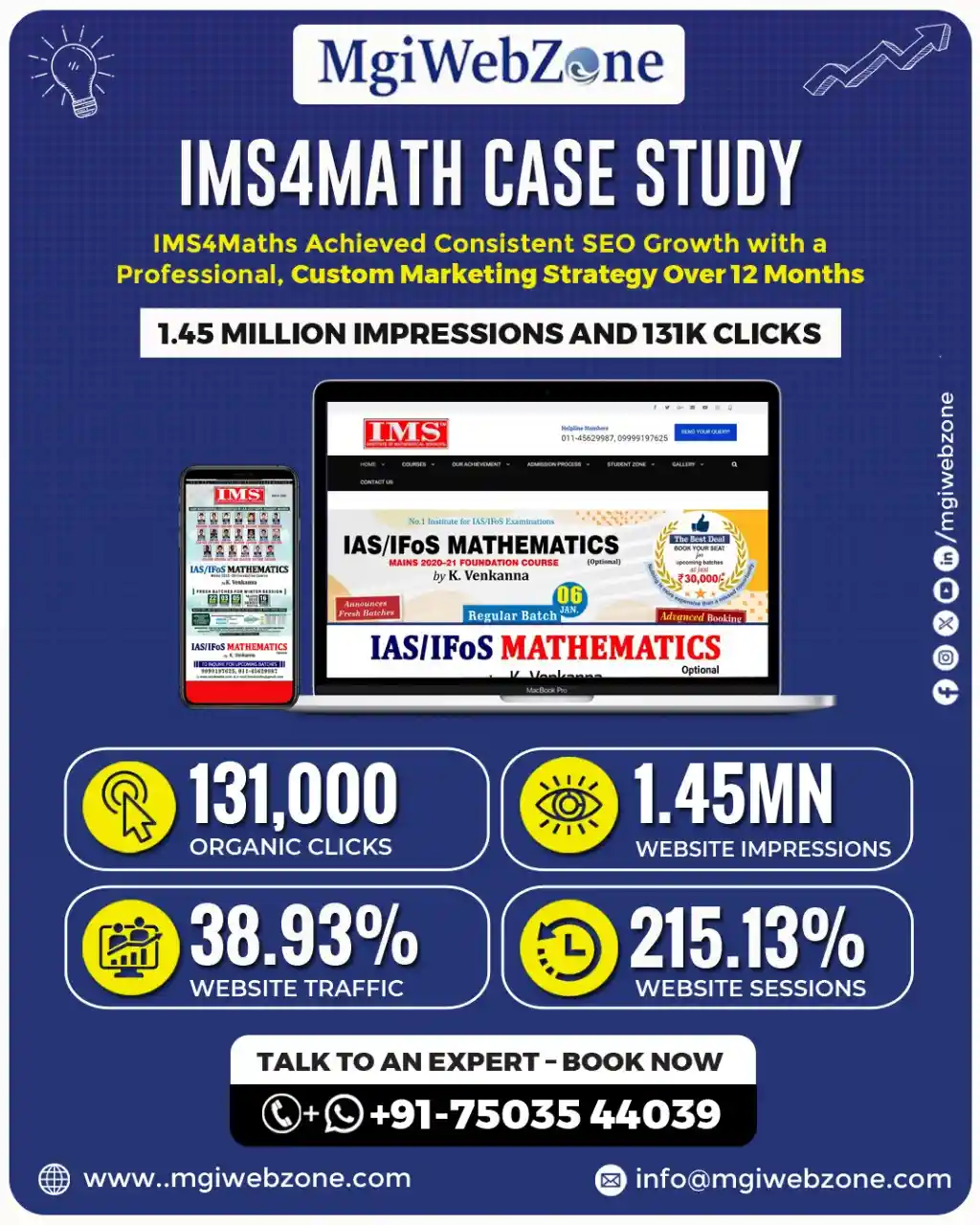
- For IMS4Maths — a UPSC Mathematics Optional coaching institute — MgiWebzone achieved a Cost Per Admission (CPA) of just ₹1,528 through a structured Google Ads campaign with precise keyword targeting, geo-targeting, and landing page optimisation. (MgiWebzone Case Studies)
To put this in context: many coaching institutes in competitive categories spend anywhere between ₹5,000 and ₹15,000 to acquire a single admission through poorly managed campaigns.
A CPA of ₹1,528 represents not just cost efficiency — it represents the kind of scalable admissions growth that allows an institution to increase batch sizes without proportionally increasing its marketing budget.
- Across education clients, MgiWebzone has delivered up to a 54% inquiry-to-admission conversion rate — meaning that for every two genuine enquiries generated through our campaigns, at least one converted into a paying student. (MgiWebzone Case Studies)
This conversion rate is a reflection of campaign quality at every stage — from targeting the right student audience, to delivering them to a high-converting landing page, to supporting the admissions team with a structured follow-up process.
Lead generation for educational institutions is not just about volume — it is about generating the right leads and converting them efficiently.
- On average, PPC advertising delivers $2 in revenue for every $1 spent — a 200% ROI — making it one of the most cost-effective marketing channels available to education institutions. (WordStream)
In the education sector specifically, where admission searches are concentrated around peak seasons, this ROI improves significantly when campaigns are properly structured, monitored, and optimised throughout the admission cycle.
ROI Comparison of Digital Marketing Channels for Education Institutions (2026)
Marketing Channel | Avg ROI | Cost Per Lead | Conversion Quality | Time to Results |
SEO — Organic Search | Very High (300%–500%) | Low | High — research-based intent | Medium to Long Term |
PPC — Google Ads | High (~200%) | Medium | Very High — admission intent | Immediate |
Social Media Ads | High (400%–800%) | Medium | Medium to High | Fast |
WhatsApp Marketing | Very High (up to 8x ROAS) | Very Low | Very High | Immediate |
Email Marketing | Extremely High (~3,600%) | Very Low | Medium | Medium |
AI + Automation | High — efficiency boost | Reduces CPL over time | Improves all channels | Long Term |
Key Takeaway
Nearly half of all student enrollment leads now come from digital channels — and the institutions managing those channels intelligently are achieving costs per admission that traditional marketing simply cannot match.
Whether through SEO for long-term admissions growth, Google Ads for immediate enrollment results, or WhatsApp automation for lead nurturing, the common thread is this: every rupee spent on digital marketing should be tracked, measured, and optimised.
That is exactly how MgiWebzone achieved a ₹1,528 cost per admission for IMS4Maths — and it is the standard we apply to every education client we work with.
Indian Education Marketing Trends to Watch in 2026 and 2027
The education marketing landscape in India is shifting faster than most institutions realise. AI is changing how students search, how institutions target, and how admissions teams follow up.
The coaching institutes and schools that are paying attention to these trends right now will have a clear head start over those that wait and react. Here is where education marketing in India is heading over the next 12 to 24 months.
Voice Search in Regional Languages Will Keep Growing
Students in Tier 2 and Tier 3 cities are increasingly using voice queries on their smartphones to find coaching institutes, tuition centres, and courses near them — in Hindi and regional languages.
Searches like “mere paas best UPSC coaching kaun si hai” or “Lucknow mein NEET coaching centre” are becoming more common every month.
For education institutions, this means voice search optimisation for coaching institutes — with conversational, question-based content in Hindi and regional languages — will become a meaningful source of local student traffic over the next two years.
AI Personalisation Will Make Student Targeting Far More Precise
Generic ads shown to broad audiences are becoming less effective and more expensive. AI-powered advertising platforms — including Google Ads and Meta Ads — are now capable of delivering different creatives, messages, and offers to different students based on their academic stage, location, browsing behaviour, and even the time of day they are most likely to engage.
For coaching institutes running Google Ads and Meta Ads for student enrollment, this means campaigns built around AI-driven audience segmentation will consistently outperform manually managed broad campaigns — both in cost per lead and in admission conversion rates.
Short-Form Video Will Dominate Student Discovery
Instagram Reels and YouTube Shorts have already replaced static posts as the primary content format through which students discover new coaching institutes and schools. This trend will only accelerate through 2026 and 2027.
Institutions that publish consistent short-form video content — faculty introductions, result announcements, student testimonials, quick course explainers — will build brand familiarity and trust with prospective students long before those students ever make an enquiry.
Video marketing for coaching institutes and schools is no longer a content strategy — it is a student acquisition strategy.
Hybrid Learning Model Marketing Will Require a Dual Approach
As coaching institutes and EdTech platforms increasingly offer both online and offline learning options, their marketing must reflect both.
A student in Delhi might want classroom coaching. A student in a Tier 3 city might need a fully online programme. The same institution now needs to communicate two distinct value propositions to two distinct audiences — simultaneously.
Digital marketing strategies for hybrid education institutions will need to be built around audience segmentation from the ground up — with separate landing pages, separate ad campaigns, and separate content strategies for online and offline student acquisition.
AI Chatbots for Instant Admission Enquiry Handling Will Become Standard
Students today expect an immediate response when they enquire about a course or admission. An enquiry that goes unanswered for even a few hours is often an enquiry that moves to a competitor.
AI-powered chatbots integrated into institution websites and WhatsApp — capable of answering course queries, sharing brochures, and booking counselling calls automatically — will become the baseline expectation for any serious education institution by 2027.
For coaching institutes still relying on manual follow-up through phone calls and emails, this is the single biggest operational change worth investing in right now.
WhatsApp Business API Adoption Will Grow Significantly
The WhatsApp Business API for coaching institutes and schools allows institutions to build fully automated, multi-step communication sequences — from the moment a student first enquires, all the way through to admission confirmation.
Automated reminders, fee payment nudges, demo class invitations, and re-engagement messages can all run without any manual involvement from the admissions team.
Institutions that implement WhatsApp automation in 2026 will see measurable improvements in lead-to-admission conversion rates — simply because they are following up faster, more consistently, and more personally than institutions relying on manual processes.
Key Takeaway
The education institutions that will lead admissions growth in 2026 and 2027 are not necessarily the ones with the biggest budgets — they are the ones adopting smarter strategies.
Voice search, AI personalisation, short-form video, hybrid marketing, chatbot automation, and WhatsApp API are not distant future trends. They are happening right now, and the institutions investing in them today are already pulling ahead of those that are not.
5 Key Takeaways from India's Education Marketing Data 2026
If there is one thing this report makes clear, it is that the way students find and choose educational institutions in India has permanently changed.
Here are the five most important conclusions every coaching institute, school, and college should take away from this data.
- 62% of Students Start Their Institute Search Online — Your Institution Must Be Visible Everywhere They Look
Whether a student opens Google, scrolls through Instagram, or asks ChatGPT for a recommendation, your institution needs to appear.
62% of enrollment journeys now begin online — which means if you are not consistently visible across Google Search, social media platforms, and AI tools, you are invisible to the majority of students who are actively looking for what you offer. Digital visibility is no longer a marketing advantage. It is the entry requirement.
- SEO and Local SEO Are the Most Cost-Effective Long-Term Admissions Engines
Organic search drives 53% of all traffic to education websites — without ongoing ad spend.
A well-executed SEO and local SEO strategy for coaching institutes and schools takes time to build, but once established, it generates a steady flow of student enquiries at near-zero cost per lead.
No other marketing channel delivers this kind of compounding return over time. Institutions that invest in SEO today are building an admissions engine that will keep running years from now.
- Google Ads Delivers 200% ROI — But Only When Campaigns Are Managed Correctly
PPC advertising is the fastest way to generate high-intent student enquiries — but the keyword here is correctly. Broadly targeted, poorly optimised campaigns waste budget on clicks that never convert.
When Google Ads campaigns are built around admission-intent keywords, supported by optimised landing pages, and refined continuously through the admission season, the return is significant.
MgiWebzone achieved a cost per admission of just ₹1,528 for IMS4Maths — a direct result of disciplined, data-driven Google Ads management for educational institutions.
- Social Media Is Now a Search Tool — 60% of Students Use It to Find Institutions
Instagram, YouTube, and Facebook are no longer just platforms for posting updates and announcements. 60% of students actively use these platforms as search engines — looking for authentic content, student reviews, faculty videos, and course information before they ever visit an institution’s website.
If your coaching institute or school does not have a consistent, discoverable social media presence, you are missing more than half your potential student audience before the conversation even begins.
- AI Tools Like ChatGPT and Gemini Are Where the Next Generation of Students Will Find Your Institute
36% of students are already using AI search tools to discover and evaluate colleges and coaching institutes. This number will only grow.
The institutions that appear in AI-generated answers today — through structured content, strong domain authority, and answer engine optimisation — are building a trust advantage with tomorrow’s students right now.
AI visibility for educational institutions is not a future consideration. It is a present-day competitive edge that is available to those willing to act on it early.
Final Thought
The data across every section of this report points to the same conclusion: students are online, they are searching, and they are making decisions based on what they find.
The institutions that show up — on Google, on social media, in AI answers, and on mobile — are the ones that will grow. The ones that don’t will find it harder every admission season to maintain the same results with the same old approach.
Conclusion: The Future of Education Marketing in India Belongs to Institutions That Act Now
India’s education sector is growing faster than at any point in its history — and this report has shown, data point by data point, exactly how that growth is playing out in the digital world.
Students are searching online before they enquire. Parents are reading reviews before they visit. And an increasing number of both are turning to AI tools for personalised recommendations before they ever land on an institution’s website.
Digital marketing for educational institutions in India is no longer a support function — it is the primary engine of student enrollment for every coaching institute, school, tuition centre, college, and EdTech platform that wants to grow in 2026 and beyond.
The institutions winning admissions today are not necessarily the oldest, the largest, or the most well-known. They are the ones that show up consistently — on Google Search, on Google Maps, on Instagram and YouTube, in WhatsApp follow-up sequences, and increasingly, in AI-generated answers on ChatGPT and Gemini.
They are the ones investing in SEO, running properly managed Google Ads campaigns, building trust through video and social media, and using data to make smarter decisions every admission season.
The gap between institutions that have embraced this shift and those that have not is already visible — in enquiry volumes, in cost per admission, and in batch sizes. And that gap will only widen as competition across India’s education sector continues to intensify.
The good news is that for institutions willing to invest in the right strategy, the opportunity has never been larger. India’s 580 million strong youth population, its rapidly expanding internet access, and its growing appetite for quality education across every category — from UPSC coaching to professional certification to K-12 tuition — mean that demand is not the challenge. Visibility is.
The institutions that invest in data-driven, ROI-focused digital marketing for education today — across SEO, PPC, social media, AI visibility, and marketing automation — will be the ones filling their batches tomorrow, next year, and for years to come.
MgiWebzone — Education Marketing Agency in India
MgiWebzone is an Edtech marketing agency based in Delhi, with over 12 years of experience and a track record of working with 1,000+ clients across India.
We specialise in SEO, AI SEO, Local SEO, Google Ads, Meta Ads, Website Design, Content Marketing, and Marketing Automation — with a particularly strong focus on the education sector.
Over the years, we have worked with coaching institutes, tuition centres, schools, colleges, EdTech platforms, skill training centres, and educational consultants across India — helping them move from inconsistent, season-dependent admissions to a stable, predictable flow of high-quality student enquiries throughout the year.
Our results speak for themselves. For IMS4Maths, a UPSC coaching institute, we achieved a Cost Per Admission of just ₹1,528. Across education clients, we have delivered inquiry-to-admission conversion rates of up to 54%.
These are not benchmark figures — they are real outcomes from real campaigns, and you can read the full details in our case studies.
How MgiWebzone Helps Educational Institutions Increase Student Enrollment
We do not just run ads or publish content. We build end-to-end digital marketing systems for educational institutions that work together — attracting the right students, nurturing their interest, and converting enquiries into confirmed admissions.
Every strategy we build is designed to improve five things:
- Lead Volume — More student enquiries generated consistently across SEO, Google Ads, Meta Ads, and social media — not just during peak admission seasons but throughout the year.
- Lead Quality — Enquiries from students who are genuinely interested in your specific courses and programmes, not random traffic that wastes your admissions team’s time.
- Conversion Rate — A higher percentage of enquiries converting into applications and admissions, supported by optimised landing pages, WhatsApp automation, and structured follow-up systems.
- Cost Per Enrollment — Lower marketing spend per admitted student, achieved through smarter targeting, better landing pages, and continuously optimised campaigns.
- Brand Trust and Visibility — A strong, credible digital presence across Google Search, Google Maps, Instagram, YouTube, and AI platforms — so students find you, trust you, and choose you over competitors.
Every strategy we build — whether it is an SEO campaign for a coaching institute, a Google Ads strategy for a school, or a complete digital marketing plan for an EdTech platform — is focused on one outcome: growing your student enrollment sustainably and cost-effectively.
Ready to Scale Your Admissions in 2026-27?
If you are a coaching institute, school, tuition centre, or college looking to grow your admissions through a proven, data-driven approach, we would love to talk.
You can Book a Free Consultation, Request a Free Marketing Audit, or simply call us directly to discuss your institution’s 2026-27 marketing plan.
FAQs: Indian Education Marketing Statistics Report 2026
How big is the education market in India in 2026?
India’s education market is projected to reach Rs. 26,94,617 crore (US$ 313 billion) by FY30 — making it one of the largest education markets in the world. Within this, the higher education segment alone is valued at Rs. 5,75,000 crore (US$ 68 billion) in 2024 and is expected to nearly double to Rs. 11,60,000 crore (US$ 134 billion) by 2033.
The Indian EdTech market, currently valued at Rs. 64,875 crore (US$ 7.5 billion), is projected to reach Rs. 2,50,850 crore (US$ 29 billion) by 2030. India has also become the second-largest e-learning market in the world, right after the United States. (IBEF / IMARC Group)
For coaching institutes, schools, tuition centres, and EdTech platforms, this scale represents a massive and still-growing student acquisition opportunity — one that digital marketing is uniquely positioned to capture.
What is the size of the coaching institute industry in India?
India’s coaching institute industry is valued at approximately ₹58,000 crore (US$ 7 billion+) annually and is one of the largest parallel education economies in the world.
The market is projected to reach ₹1.33 to ₹1.5 lakh crore by 2028–2030, with the broader coaching and online education segment expected to reach US$ 17.8 billion by 2034, growing at a CAGR of approximately 10.29%.
Key facts about India’s coaching industry:
- Total market size: ₹58,000 crore+ annually and growing consistently
- Student reach: 15 to 25 lakh students actively enrolled in coaching centres at any given time
- Institute count: Over 60,000 coaching centres operating across India, with Uttar Pradesh, Maharashtra, and Bihar having the highest concentrations
- Primary segments: UPSC, NEET, IIT-JEE, CAT, SSC CGL, and banking exams drive the majority of demand
- Geographic spread: While Kota and Delhi remain the largest hubs, hybrid and online models are rapidly expanding coaching access into Tier 2, Tier 3, and rural markets
- Regulatory note: The industry is largely unregulated and currently attracts 18% GST, though this has not slowed market growth
The single biggest driver behind this growth is intensifying competition for limited seats in top colleges and government jobs — making quality coaching a near-necessity for millions of Indian students every year.
What is the growth rate of the Indian education sector in 2026?
India’s education sector is growing strongly across every segment in 2026:
- Overall education market: Projected to reach US$ 313 billion by FY30
- Higher education: Growing at a CAGR of 8.1%, expected to reach Rs. 11,60,000 crore by 2033
- EdTech and online education: Growing at a CAGR of approximately 24–28%, projected to reach US$ 29 billion by 2030
- AI in education: India’s AI education market projected to reach US$ 1,140.3 million by 2030
- Coaching industry: Growing at a CAGR of approximately 10.29%, projected to reach US$ 17.8 billion by 2034
The key growth drivers are India’s young population, expanding internet access, rising smartphone adoption, and growing demand for competitive exam preparation across Tier 1, Tier 2, and Tier 3 cities.
How many students enroll in coaching institutes every year in India?
An estimated 15 to 25 lakh students are actively enrolled in coaching centres across India at any given time. When you include students preparing for competitive exams like UPSC, NEET, IIT-JEE, CAT, SSC, and state-level PSC exams, the total number of students engaged with some form of coaching or supplementary education runs into several crore annually.
To put this in context — India currently has 24.8 crore students enrolled in its school education system alone, and a significant and growing share of these students simultaneously attend tuition centres, crash courses, or online coaching programmes.
As competition for limited seats in top colleges and government jobs intensifies every year, coaching enrollment continues to grow — making student acquisition through targeted digital marketing for coaching institutes increasingly important and increasingly competitive.
What percentage of students start their institute search online before enrolling?
Nearly 62% of student enrollment journeys now begin online — through Google Search, social media platforms, or directly on an institution’s website.
Additionally:
- 70%+ of students use Google specifically to research, compare, and evaluate coaching institutes and colleges before making any admission decision
- 80%+ of online college students visited an institution’s website while researching their options
- 47% of graduate enrollment leads now come directly from digital advertising or organic search
What this means practically is that for the majority of students, their first impression of your coaching institute is formed entirely online — through your website, your Google Business Profile, your social media pages, or what others say about you in reviews.
If that first impression is weak, incomplete, or missing, most students will simply move on to a competitor they can find more easily.
Which competitive exam has the highest coaching demand in India?
UPSC Civil Services, NEET, and IIT-JEE consistently generate the highest coaching demand in India — both in student numbers and willingness to invest in quality preparation.
- UPSC attracts over 10 lakh applicants every year for approximately 1,000 final selections — one of the most intense competition ratios of any exam in the world
- NEET sees over 20 lakh registered candidates annually competing for limited MBBS and BDS seats across government and private medical colleges
- IIT-JEE attracts over 10 lakh candidates every year for approximately 17,000 IIT seats
Beyond these three, CAT, SSC CGL, IBPS banking exams, CUET, and state-level PSC exams also generate significant and growing coaching demand — particularly in Tier 2 and Tier 3 cities where students increasingly prefer local or hybrid coaching options.
For coaching institutes operating in any of these exam categories, the combination of high student numbers, high stakes, and high parental investment makes digital marketing for UPSC, NEET, and JEE coaching institutes one of the highest-return marketing investments available.
How does SEO help coaching institutes get more student admissions?
SEO (Search Engine Optimisation) helps coaching institutes appear on the first page of Google when students and parents search for courses, exam preparation, and institutes in their city.
Since 53% of all traffic to education websites comes from organic search and 70% of students begin their institute research on Google, ranking on page one directly translates into more website visits, more enquiries, and more admissions — without paying for every single click.
A well-executed SEO strategy for coaching institutes works across three levels:
- National visibility — ranking for competitive exam keywords like “best UPSC coaching in India” or “top NEET preparation institute”
- Local visibility — appearing in Google Maps and local search results when students search “coaching institute near me”
- AI visibility — being cited in Google AI Overviews, ChatGPT, and Gemini answers when students ask for institute recommendations
Unlike paid ads that stop generating leads the moment you stop spending, SEO builds a compounding asset — a coaching institute that ranks well on Google today will continue receiving enquiries at near-zero cost per lead for months and years ahead.
What is the best SEO strategy for coaching institutes and schools in India?
The most effective SEO strategy for coaching institutes and schools in India combines four key elements working together:
- Keyword targeting — Focus on high-intent, location-specific keywords like “best UPSC coaching in Delhi,” “NEET preparation institute in Mumbai,” or “IIT-JEE coaching in Pune.” Long-tail keywords have lower competition and attract students who are closer to making an admission decision.
- Local SEO — Optimise your Google Business Profile completely, build consistent local citations, and actively collect genuine student reviews. Local SEO is what puts your institute in Google Maps results and the local three-pack — the most visible position for “near me” searches.
- Content marketing — Publish regular blog posts, FAQs, course guides, and exam preparation articles that answer the specific questions students are searching for. This builds domain authority over time and helps your institute appear in both Google featured snippets and AI Overviews.
- Technical SEO — Ensure your website loads fast on mobile, has a clean URL structure, proper heading tags, and schema markup. A technically sound website ranks faster and holds its position longer.
For coaching institutes with multiple branches or course categories, combining local SEO with content-led SEO consistently delivers the highest long-term return on investment.
How long does SEO take to show results for a coaching institute?
For most coaching institutes, SEO begins showing meaningful results within 3 to 6 months — and reaches full performance within 9 to 12 months. The exact timeline depends on several factors:
- Competition in your city — highly competitive markets like Delhi, Mumbai, and Bengaluru take longer than Tier 2 cities
- Current website health — a technically strong website ranks faster than one with speed or structural issues
- Content consistency — institutes that publish regular, high-quality content see faster authority growth
- Domain age — older domains with existing backlinks respond to SEO faster than brand-new websites
The important thing to understand about SEO is that it compounds over time. A coaching institute that invests in SEO consistently for 12 months will typically generate admissions at a cost per lead far lower than any paid advertising channel — and those rankings continue delivering results long after the initial investment.
For institutes that need immediate admissions while SEO builds in the background, running Google Ads alongside SEO is the most effective combined strategy.
What is local SEO and why is it important for coaching centres?
Local SEO is the process of optimising your coaching institute’s online presence so it appears prominently in location-based searches — such as “UPSC coaching near me,” “best tuition centre in Laxmi Nagar,” or “NEET institute in Hyderabad.”
For coaching centres, local SEO is critically important because the majority of students prefer institutes within a reasonable distance from their home or college. When a student searches for a coaching centre in their area, Google shows a “local pack” — a map with three institute listings.
Appearing in this local pack consistently drives high-quality, geographically relevant enquiries that are far more likely to convert into admissions than broad national traffic.
Key components of local SEO for coaching institutes include:
- A fully optimised and regularly updated Google Business Profile
- Consistent NAP (Name, Address, Phone) information across all online directories
- Genuine student reviews on Google — quantity and quality both matter
- Location-specific pages on your website for each branch or city you serve
- Local keyword targeting in website content and meta descriptions
Coaching institutes that rank in Google’s local three-pack receive 7x more clicks than those with incomplete or unoptimised listings.
How can I rank my coaching institute in “near me” searches on Google?
Ranking in “near me” searches on Google requires a focused local SEO strategy built around three things:
- Google Business Profile optimisation — This is the single most important factor for near me rankings. Your GBP must be fully completed — with accurate address, phone number, website, business hours, course categories, photos, and regular posts. Google prioritises complete, active listings in local results.
- Consistent student reviews — Google’s local ranking algorithm heavily weights the number and quality of reviews. Coaching institutes with 50+ genuine Google reviews consistently outrank competitors with fewer reviews, even if other factors are equal. Actively encourage every admitted student to leave a review.
- Local keyword content on your website — Create dedicated pages for each location you serve, using specific phrases like “UPSC coaching in Rajouri Garden” or “IIT-JEE preparation in Andheri.” Google matches near me searches to websites that clearly signal their geographic relevance through content.
“Near me” searches have grown by over 200% in recent years — and for coaching institutes, these searches represent some of the highest-intent, most conversion-ready traffic available in local digital marketing.
How important is Google Business Profile for coaching institutes and schools?
Google Business Profile (GBP) is one of the most important — and most underused — digital marketing tools for coaching institutes and schools in India. It is completely free to set up, yet the impact of a well-optimised GBP listing is significant:
- Institutes with complete GBP listings receive 7x more clicks than those with incomplete profiles
- Adding photos to a GBP listing boosts revenue per visitor by 17%
- Over 50% of GBP interactions directly lead to a website visit or phone call
- “Near me” searches — which GBP directly influences — have grown by over 200%
For coaching institutes, GBP is particularly powerful because it puts your institute directly in front of students and parents at the exact moment they are searching locally — showing your location on Google Maps, your reviews, your course offerings, your phone number, and your website in a single, highly visible listing.
A coaching institute without an optimised Google Business Profile is effectively invisible to every student doing a local search — and in competitive cities, that invisibility costs real admissions every month.
Why is my coaching institute website not ranking on Google?
There are several common reasons why a coaching institute website fails to rank on Google — and most of them are fixable:
- Your website is not optimised for the right keywords — If your website does not specifically mention the courses you offer, the exams you prepare for, and the cities you serve, Google has no clear signal about what searches to show you for.
- Your website is slow on mobile — Google uses mobile page speed as a direct ranking factor. If your site takes more than 3 seconds to load on a smartphone, it will consistently rank lower than faster competitors — regardless of your content quality.
- You have no local SEO foundation — Without a properly optimised Google Business Profile, consistent local citations, and location-specific content, your institute will not appear in local search results even if your website is otherwise well-built.
- You have little or no content — Google rewards websites that consistently publish helpful, relevant content. A coaching institute website with only a home page, an about page, and a contact form gives Google very little to rank.
- You have no backlinks or domain authority — New websites without any external links pointing to them take longer to rank because Google has not yet established their credibility.
- Your competitors are investing in SEO and you are not — In competitive markets like Delhi, Mumbai, and Bengaluru, top-ranking coaching institute websites have typically been actively investing in SEO for 12 to 24 months. Catching up requires a structured, consistent effort.
How does Google Ads help coaching institutes get more students?
Google Ads puts your coaching institute directly in front of students who are actively searching for exactly what you offer — at the exact moment they are ready to enquire.
When a student types “best UPSC coaching in Delhi” or “NEET crash course in Mumbai” into Google, a well-structured Google Ads campaign ensures your institute appears at the top of the results — above all organic listings.
This is what makes Google Ads fundamentally different from social media advertising. On Instagram or Facebook, you are interrupting someone who was not looking for you. On Google Search, you are appearing for someone who is already looking for a coaching institute like yours.
For coaching institutes, Google Ads delivers three specific advantages:
- Speed — Unlike SEO which takes months to build, Google Ads generates enquiries from day one of the campaign going live
- Intent targeting — Every click comes from a student or parent who typed a specific admission-related search query
- Measurability — Every rupee spent, every click received, and every enquiry generated is tracked and reportable
When campaigns are properly structured — with the right keywords, optimised landing pages, and continuous monitoring — Google Ads consistently delivers a 200% ROI and can bring coaching institute admission costs down to as low as ₹1,528 per confirmed admission, as achieved by MgiWebzone for IMS4Maths.
What is the average Google Ads cost per click for coaching institutes in India?
The average Google Ads CPC for coaching institutes in India typically ranges between ₹40 and ₹80 per click, depending on the exam category, city, keyword competition, and time of year.
Highly competitive keywords in metro cities during peak admission seasons — January to March and June to August — can push CPCs higher.
Here is a rough breakdown by exam category:
- UPSC coaching keywords: ₹45 to ₹90 per click in competitive cities like Delhi
- NEET coaching keywords: ₹50 to ₹100 per click during admission season
- IIT-JEE coaching keywords: ₹40 to ₹85 per click
- MBA and CAT coaching keywords: ₹35 to ₹70 per click
- School tuition and general coaching: ₹15 to ₹45 per click
MgiWebzone’s own education campaigns have recorded CPCs of ₹52.38 for ProdEgyIAS, ₹57.97 for IMS4Maths, and between ₹41.94 and ₹59.28 for Sapiens IAS — consistent with these ranges for competitive UPSC optional subject keywords in Delhi.
The most important thing to understand is that CPC alone is not the metric that matters. What matters is cost per admission — and that is determined by how well your landing page converts clicks into enquiries, and how well your admissions team converts enquiries into confirmed students.
What is a good cost per admission through Google Ads for coaching institutes?
A good cost per admission (CPA) through Google Ads for coaching institutes in India typically ranges between ₹1,500 and ₹5,000 for well-managed campaigns — though poorly managed campaigns can push this figure to ₹10,000 or higher.
The benchmark varies by exam category and course fee:
- For high-fee UPSC and NEET coaching (fees above ₹50,000), a CPA of up to ₹5,000 to ₹8,000 can still be profitable
- For mid-range coaching programmes (fees between ₹15,000 and ₹50,000), a CPA below ₹3,000 is a strong result
- For affordable tuition centres and local coaching (fees below ₹15,000), keeping CPA under ₹1,500 is the target
MgiWebzone achieved a cost per admission of just ₹1,528 for IMS4Maths — a UPSC Mathematics Optional coaching institute — through precise keyword targeting, geo-targeting, negative keyword filtering, and optimised landing pages.
This represents one of the strongest CPA results in the competitive UPSC coaching segment.
The rule of thumb is simple: your cost per admission should never exceed 10% of your course fee. If it does, your campaign needs restructuring — not more budget.
Is SEO better than Google Ads for coaching institutes?
Neither is better than the other — they serve different purposes and work best together. The right question is: what does your coaching institute need right now?
SEO | Google Ads | |
Speed of results | 3 to 12 months | Immediate |
Cost per lead | Very low long-term | Medium |
Traffic quality | High — research intent | Very high — admission intent |
Sustainability | Compounds over time | Stops when budget stops |
Best for | Long-term admissions growth | Immediate batch filling |
Choose Google Ads if your institute needs admissions immediately — for a new batch launching next month, a new branch opening, or a seasonal admission push.
Choose SEO if your institute is planning for consistent, year-round admissions growth over the next 12 to 24 months at the lowest possible cost per lead.
Choose both if you want to fill batches now while building a long-term organic admissions engine simultaneously — which is exactly what MgiWebzone recommends and implements for education clients running integrated SEO and Google Ads strategies for coaching institutes.
Why am I not getting leads even after running Google Ads?
This is one of the most common problems coaching institutes face — and it almost always comes down to one or more of these reasons:
- Wrong keywords — Bidding on broad, generic terms like “coaching” or “online classes” attracts clicks from students researching all kinds of unrelated topics. Your ads need to target specific, high-intent keywords like “UPSC coaching in Delhi 2026” or “NEET preparation institute in Pune.”
- Weak or mismatched landing page — If your ad promises “best NEET coaching in Mumbai” but sends the student to your generic homepage, most visitors will leave without enquiring. Your landing page must match your ad copy exactly and have a single, clear call to action.
- No negative keywords — Without a negative keyword list, your ads show for irrelevant searches — wasting budget on clicks that will never convert. Common negative keywords for coaching institutes include “free,” “government,” “jobs,” “salary,” and “syllabus download.”
- Poor mobile experience — Over 70% of Google Ads clicks come from mobile devices. If your landing page is slow or hard to navigate on a smartphone, you are losing the majority of your clicks before they even read your offer.
- Targeting too broadly — Running a nationwide campaign when your institute serves only Delhi or Pune means paying for clicks from students who will never travel to your location.
- No follow-up system — Sometimes leads are being generated but are falling through the cracks because of slow or inconsistent follow-up. A lead that is not contacted within the first hour of enquiring is significantly less likely to convert.
How many admissions can I realistically expect from paid advertising?
The number of admissions from paid advertising depends on your budget, your course category, your city, and the quality of your campaign management. Here is a realistic framework based on actual education campaign data:
For a monthly Google Ads budget of ₹30,000 to ₹50,000 in a competitive city like Delhi for UPSC or NEET coaching:
- Expected clicks per month: 500 to 1,000
- Expected enquiries (at 5% conversion): 25 to 50
- Expected admissions (at 20 to 30% enquiry-to-admission rate): 5 to 15 admissions per month
For a well-optimised campaign with strong landing pages and fast follow-up:
- MgiWebzone has delivered inquiry-to-admission conversion rates of up to 54% for education clients — meaning 1 out of every 2 genuine enquiries converted into a paying student
- At this conversion rate, the same 25 to 50 monthly enquiries could yield 12 to 27 admissions
These are not guaranteed numbers — they vary based on course fee, competition, and admissions team quality. But they give a realistic starting point for planning your Google Ads budget for coaching institute admissions.
How much should I invest in Google Ads to get 100 admissions?
To get 100 admissions from Google Ads, work backwards from your target using this simple framework:
Step 1 — Know your cost per admission (CPA) A well-managed Google Ads campaign for a coaching institute typically achieves a CPA between ₹1,500 and ₹5,000. MgiWebzone achieved ₹1,528 CPA for IMS4Maths. (MgiWebzone Case Studies)
Step 2 — Calculate your required budget
- At ₹1,528 CPA → 100 admissions requires approximately ₹1.5 lakh in ad spend
- At ₹3,000 CPA → 100 admissions requires approximately ₹3 lakh in ad spend
- At ₹5,000 CPA → 100 admissions requires approximately ₹5 lakh in ad spend
Step 3 — Factor in your admission season India’s coaching admission peaks run January to March and June to August. Concentrating budget during these windows significantly improves efficiency and lowers CPA.
The key insight here is that the quality of campaign management matters more than the size of the budget. Two institutes spending the same amount on Google Ads can achieve wildly different CPAs depending on keyword strategy, landing page quality, and follow-up speed.
Investing in professional Google Ads management for coaching institutes typically reduces CPA by 40 to 60% compared to self-managed campaigns — making the agency fee more than pay for itself in saved ad spend.
Which social media platform works best for coaching institute marketing in India?
No single platform works best for every coaching institute — the right platform depends on your target audience, exam category, and marketing goal. Here is how each platform performs for education marketing in India:
Platform | Best For | Key Strength |
Students aged 16 to 25 | Highest engagement rate in education at 8.4% | |
YouTube | All student segments | 79% of Gen Z in India use it daily |
Parents and mature students | Best ROI — 400% to 800% for education ads | |
Lead nurturing and follow-up | 98% message open rate | |
MBA, professional courses | Best for working professionals and postgraduates |
For most coaching institutes targeting students preparing for UPSC, NEET, IIT-JEE, or school-level exams, the most effective combination is:
- Instagram and YouTube for organic discovery and brand building
- Facebook and Instagram Ads for paid student acquisition
- WhatsApp for lead nurturing and admission conversion
52% of students have discovered a college or coaching institute through social media — making a multi-platform presence essential, not optional.
How does Instagram marketing help educational institutions attract students?
Instagram is currently the highest-engagement social media platform for the education sector, with an average engagement rate of 8.4% — the highest of any industry on the platform.
For coaching institutes and schools, Instagram works as both a discovery and trust-building channel:
- Reels are the primary format through which students discover new coaching institutes — faculty introduction Reels, result announcement videos, and student testimonial clips consistently generate organic reach far beyond your existing follower base
- Stories keep your current audience engaged with daily updates, doubt-clearing sessions, and admission reminders
- Instagram Ads allow precise targeting by age, location, academic interests, and exam category — reaching students who have never heard of your institute before
Coaching institutes that post consistently on Instagram — at least 4 to 5 times per week across Reels, Stories, and posts — typically see enquiry volumes grow significantly within 3 to 6 months, without any paid promotion.
When combined with Instagram Ads for coaching institutes, the platform becomes one of the most cost-effective student acquisition channels available in India today.
How does WhatsApp marketing help coaching institutes convert more leads?
WhatsApp is the most powerful lead conversion tool available to coaching institutes in India — and it is the one most institutions are not using properly.
Here is why it works so well:
- WhatsApp messages have a 98% open rate — compared to 20% for email and far lower for phone calls
- Coaching institutes using WhatsApp for admissions see up to 50% higher conversion rates compared to those relying only on enquiry forms and callbacks
- 80.8% of Indian internet users use WhatsApp daily for communication — making it the most natural and familiar channel for reaching students and parents
The real power of WhatsApp for coaching institutes comes from automation. Once a student enquires — through a Google Ad, a social media post, or a website form — a WhatsApp automation sequence can:
- Instantly send course details, fee structure, and brochure
- Share demo class links and schedule reminders automatically
- Follow up with students who did not respond to the first message
- Nurture leads through a step-by-step journey from first enquiry to confirmed admission
This means your coaching institute is responding to student enquiries 24 hours a day — without adding anyone to your admissions team. Combined with Facebook Click-to-WhatsApp Ads, this creates a complete, low-cost lead generation and conversion system for coaching institutes.
How does video marketing increase student admissions for coaching institutes?
Video is the single most persuasive content format for coaching institute marketing — and the data proves it clearly:
- 92% of students show stronger interest in institutions that use video in their marketing
- Video on landing pages boosts conversion rates by 86% — meaning nearly double the enquiries from the same ad spend
- Video testimonials increase conversion rates by 80% — authentic student success stories build the kind of trust that no written content can replicate
- 82% of students actively watch videos on institution websites during their research phase
For coaching institutes specifically, video works at every stage of the student admission journey:
- Discovery stage — YouTube Shorts and Instagram Reels introduce your institute to students who have never heard of you
- Consideration stage — Faculty introduction videos, course explainers, and result announcements build credibility and differentiate your institute from competitors
- Decision stage — Student testimonial videos and campus tour clips give hesitant students the final push they need to enquire or enrol
A coaching institute that consistently produces short, authentic video content — even filmed on a smartphone — will consistently outperform one spending more on static ads and brochures.
How to target students with Meta Ads for coaching institutes and tuition centres?
Meta Ads (Facebook and Instagram Ads) offer the most precise student targeting available on any social media platform in India. Here is how to use them effectively for coaching institute and tuition centre admissions:
Audience targeting options available through Meta Ads:
- Age targeting — Reach students in specific age brackets — 16 to 18 for school coaching, 18 to 24 for competitive exam preparation, 25 to 35 for MBA and professional courses
- Location targeting — Target students in specific cities, localities, or even pin codes around your institute
- Interest targeting — Reach students interested in specific exams like UPSC, NEET, IIT-JEE, or subjects like Mathematics, Biology, or Economics
- Behaviour targeting — Target students who have recently searched for education-related content or visited competitor websites
- Lookalike audiences — Upload your existing student database and Meta will find new students with similar profiles
Most effective Meta Ads formats for coaching institutes:
- Lead generation ads — Students fill a short form directly within Facebook or Instagram without leaving the platform — lower friction, higher lead volume
- Click-to-WhatsApp ads — Student clicks the ad and is immediately taken to a WhatsApp conversation with your admissions team — the fastest path from ad click to genuine conversation
- Video ads — Short Reels-format ads showing student results, faculty credibility, or course highlights — highest engagement and lowest cost per result
With an average ROI of 400% to 800% for Facebook Ads in the education sector, Meta Ads remain one of the highest-returning paid channels for tuition centre and coaching institute student acquisition in India.
Which digital marketing channel gives the highest ROI for coaching institutes?
Different channels deliver different types of ROI — and the best answer depends on whether you are measuring short-term or long-term return:
Channel | Average ROI | Best For |
Email Marketing | ~3,600% | Lead nurturing and re-engagement |
WhatsApp Marketing | Up to 8x ROAS | Admission conversion and follow-up |
SEO — Organic Search | 300% to 500% | Long-term admissions growth |
Social Media Ads | 400% to 800% | Brand awareness and lead generation |
Google Ads — PPC | ~200% | Immediate high-intent admissions |
For most coaching institutes, the highest overall ROI comes from combining SEO with Google Ads — SEO builds a long-term organic admissions engine at near-zero cost per lead, while Google Ads delivers immediate, high-intent enquiries during peak admission seasons.
However, the single channel with the most dramatic impact on conversion rates — turning existing leads into confirmed admissions — is WhatsApp marketing automation.
Coaching institutes using structured WhatsApp follow-up sequences consistently see 50% higher conversion rates than those relying on phone calls and emails alone.
The honest answer is that no single channel works in isolation. The coaching institutes generating the most predictable admissions growth are those running an integrated strategy — Google Ads for immediate leads, SEO for long-term visibility, social media for brand trust, and WhatsApp for conversion.
What is the ROI of digital marketing for coaching institutes in India?
The ROI of digital marketing for coaching institutes in India varies significantly by channel and campaign quality — but here is what the data shows across key channels:
- Google Ads: Average 200% ROI — businesses earn ₹2 for every ₹1 spent on Google Ads
- SEO: 300% to 500% ROI over 12 months — as cost per lead drops to near zero once rankings are established
- Facebook and Instagram Ads: 400% to 800% ROI in the education sector
- Email marketing: ~3,600% ROI — ₹36 returned for every ₹1 invested
- WhatsApp automation: Up to 8x return on ad spend when combined with Click-to-WhatsApp campaigns
In real terms, MgiWebzone achieved a cost per admission of ₹1,528 for IMS4Maths through Google Ads — against a course fee significantly higher than that figure, representing a strong positive ROI from day one of the campaign.
Across education clients, MgiWebzone has delivered inquiry-to-admission conversion rates of up to 54%.
The key variable in all of these figures is campaign quality. The same budget managed poorly can deliver zero ROI — managed well, it can transform an institute’s admissions trajectory within a single admission season.
How can I generate daily student leads for my coaching institute?
Generating daily student leads for a coaching institute requires a combination of channels working simultaneously — because relying on a single source makes your admissions pipeline fragile and seasonal.
Here is a proven framework for consistent daily lead generation:
For immediate daily leads:
- Run Google Search Ads targeting high-intent keywords specific to your exam category and city — these generate enquiries from students actively searching right now
- Use Facebook and Instagram Lead Ads with course-specific targeting to capture students in the research phase
- Set up Click-to-WhatsApp Ads for the lowest-friction path from ad impression to live conversation
For growing lead volume over time:
- Invest in local SEO so your institute appears in Google Maps and near me searches organically — generating leads without ongoing ad spend
- Publish regular content and blog posts answering the specific questions your target students are searching for — this builds organic traffic that generates leads daily without paid promotion
- Maintain an active Instagram and YouTube presence with consistent Reels and Shorts — students who discover your content organically are already warm leads
For converting leads into admissions daily:
- Set up WhatsApp automation to respond to every enquiry instantly — 24 hours a day, 7 days a week
- Build a structured follow-up sequence — most admissions happen after the 3rd to 5th follow-up contact, not the first
Coaching institutes that implement all three layers — paid for immediate volume, organic for long-term growth, and automation for conversion — consistently generate daily leads throughout the year rather than only during peak admission seasons.
How to reduce cost per lead in education digital marketing?
Reducing cost per lead (CPL) in education digital marketing is about improving efficiency at every stage of your marketing funnel — not just cutting your ad budget. Here are the most effective ways:
- Tighten your keyword targeting Stop bidding on broad, generic keywords like “coaching” or “online education.” Target specific, intent-based phrases like “UPSC anthropology optional coaching in Delhi” or “NEET repeater batch in Pune.” Narrower keywords attract fewer but far more relevant clicks — lowering CPL significantly.
- Add negative keywords aggressively Regularly audit your search terms report and add irrelevant terms as negative keywords — “free,” “government jobs,” “syllabus PDF,” “admit card,” and similar terms that attract clicks from students who will never enrol.
- Optimise your landing page A landing page with a fast load time, clear headline, single call-to-action, and student testimonials consistently converts more visitors into enquiries — meaning you get more leads from the same number of clicks without spending more.
- Use geo-targeting precisely If your institute serves students in specific areas of Delhi — like Laxmi Nagar or Karol Bagh — target those specific localities rather than all of Delhi. More relevant ads to more relevant audiences means lower CPL.
- Improve follow-up speed A lead that receives a WhatsApp response within 5 minutes of enquiring is significantly more likely to convert than one contacted hours later. Faster follow-up means your existing leads convert better — effectively lowering your CPL without changing anything about your ads.
MgiWebzone has consistently reduced CPL for education clients through these exact methods — achieving a cost per admission of ₹1,528 for IMS4Maths, well below industry averages.
Is digital marketing worth it for small coaching institutes with limited budgets?
Yes — and in many ways, small coaching institutes benefit more from digital marketing than large ones. Here is why:
Large coaching chains spend crores on brand advertising, TV commercials, and nationwide campaigns. A small coaching institute cannot compete with that budget. But digital marketing levels the playing field in a way that no other marketing channel does.
With a well-structured Google Ads campaign starting at ₹15,000 to ₹20,000 per month, a small coaching institute in any Indian city can appear at the top of Google Search results — right alongside the biggest names in the industry — for the specific exam keywords and locality searches that matter to their students.
With local SEO, a small institute with strong Google reviews and an optimised Google Business Profile can outrank a large chain in local search results — because Google’s local algorithm rewards relevance and proximity, not just brand size.
With WhatsApp automation, a small admissions team of two or three people can follow up with every single enquiry instantly and consistently — competing with the response speed of institutions with dedicated call centres.
The key for small coaching institutes is focus — rather than trying to compete everywhere, concentrate your budget on:
- One or two exam categories where you have genuine expertise and results
- The specific cities or localities you serve
- The admission seasons when student intent is highest
A focused ₹20,000 monthly budget managed well will consistently outperform a ₹1 lakh budget spread too thin across the wrong channels and audiences.
Why are coaching institutes not getting enough student enquiries online?
Most coaching institutes are not getting enough online enquiries because they are invisible where students are actually searching.
Nearly 62% of student enrollment journeys begin online — but if your institute has no SEO strategy, an incomplete Google Business Profile, and no active social media presence, students simply cannot find you.
The most common reasons for low online enquiries are:
- Website not ranking on Google for relevant local and exam-specific keywords
- Google Business Profile incomplete or unverified — meaning zero local search visibility
- No paid advertising during peak admission seasons when student intent is highest
- Social media presence inactive or inconsistent — students cannot discover or trust an institute they cannot find online
- Slow enquiry follow-up — leads are being generated but not responded to quickly enough to convert
The fix is not always a bigger budget. Often it starts with fixing the basics — a properly optimised website, an active GBP listing, and a structured follow-up system. MgiWebzone offers a free digital marketing audit for coaching institutes to identify exactly where enquiries are being lost.
What are the most common digital marketing mistakes coaching institutes make?
The most common digital marketing mistakes coaching institutes make are poor targeting, weak landing pages, and inconsistent follow-up — all of which waste budget without generating admissions.
Specifically:
- Bidding on broad keywords like “coaching” or “online classes” instead of high-intent phrases like “UPSC coaching in Delhi 2026”
- Sending ad traffic to the homepage instead of a dedicated, conversion-optimised landing page
- Ignoring mobile optimisation — over 70% of Google Ads clicks come from mobile devices, yet many coaching institute websites are slow and poorly formatted on smartphones
- No negative keyword strategy — paying for irrelevant clicks from students searching for free resources or government jobs
- Posting inconsistently on social media — one post a week does not build the trust or visibility needed to influence student decisions
- No WhatsApp follow-up automation — enquiries go cold because response time is too slow
Each of these mistakes individually costs admissions. Together they can make an entire marketing budget feel completely ineffective — even when the underlying demand for your courses is strong.
Why do some coaching institutes fail at digital marketing despite good results?
Good academic results alone do not generate admissions — visibility and trust do. Many coaching institutes with genuinely strong track records fail at digital marketing because they assume their results will speak for themselves. In a crowded market, they do not.
The most common reasons strong institutes underperform digitally:
- Results are not communicated online — toppers lists, AIR rankings, and student success stories exist in offline brochures but are nowhere on the website or social media
- No review strategy — Google reviews are sparse because no one actively asks students to leave them, so the institute looks less credible than competitors with 200+ reviews
- Website looks outdated — 75% of students judge an institution’s credibility based on its website design. An outdated site signals an outdated institute — regardless of actual results
- No content marketing — the institute has no blog, no FAQ page, no exam guides — nothing that helps it appear in the informational searches students make before deciding where to enrol
- Competitors are investing more aggressively — in digital marketing, visibility is relative. If your competitor is running Google Ads, posting daily Reels, and has 500 Google reviews, your stronger results will not compensate for your lower digital presence
Great results are your strongest marketing asset — but only if they are visible, structured, and communicated where students are actually looking.
Can small coaching institutes compete with big brands using digital marketing?
Yes — and digital marketing is actually the great equaliser for small coaching institutes. A small institute with a focused digital strategy can consistently outperform a large chain in local search results, Google Maps rankings, and social media engagement — without matching their budget.
Here is why:
- Google’s local search algorithm rewards proximity and relevance — not brand size. A well-optimised Google Business Profile with strong reviews can rank a small local institute above a national chain for “near me” searches in that specific area
- Long-tail keyword targeting allows small institutes to compete for specific, lower-competition searches — “UPSC geography optional coaching in Laxmi Nagar” — where large chains rarely focus their efforts
- Authentic social media content — real faculty introductions, genuine student testimonials, honest result announcements — consistently outperforms polished corporate content from large chains in engagement and trust
MgiWebzone has helped multiple small coaching institutes achieve costs per admission as low as ₹1,528 — competing directly and successfully against well-funded larger institutes in the same cities and exam categories.
The advantage of being small is focus. A large chain must market dozens of courses across many cities.
A small institute can put its entire effort behind one exam category, one city, and one student audience — and dominate that specific space digitally.
How is AI changing digital marketing for educational institutions in India?
AI is changing education marketing in three fundamental ways — how students search, how institutions target, and how admissions teams follow up.
How students search: 36% of students now use AI tools like ChatGPT, Gemini, and Perplexity to discover and evaluate coaching institutes — asking for direct recommendations rather than browsing through Google links.
How institutions target: AI-powered advertising platforms like Google Ads and Meta Ads now automatically optimise campaigns — adjusting bids, audiences, and creatives in real time based on which combinations are most likely to generate enquiries.
Campaigns built around AI-driven audience signals consistently outperform manually managed broad campaigns.
How admissions teams follow up: AI-powered chatbots and WhatsApp automation tools respond to every student enquiry instantly — 24 hours a day — with personalised course information, fee details, and demo class links.
This dramatically improves lead-to-admission conversion rates without increasing staff.
For coaching institutes and schools, the practical implication is clear: AI is not replacing digital marketing — it is making every channel faster, smarter, and more measurable.
Institutions that adopt AI-powered SEO, automated lead funnels, and intelligent ad targeting today will consistently outperform those still running manual, broad-reach campaigns.
How can coaching institutes rank in Google AI Overviews?
Google AI Overviews pull content from pages that directly and clearly answer specific student questions — so the most effective way to rank in them is to structure your website content around the exact questions your target students are asking.
Three things coaching institutes must do to appear in Google AI Overviews:
- Create question-based content — Write dedicated pages and blog posts that answer specific queries like “which is the best UPSC coaching in Delhi,” “how much does NEET coaching cost in Mumbai,” or “what is the success rate of IIT-JEE coaching institutes in Pune.” AI Overviews consistently pull from pages that answer these questions directly in the first paragraph.
- Structure content for easy extraction — Use clear H2 and H3 headings, short paragraphs, bullet points for lists, and bold text for key facts. AI systems extract structured content far more reliably than dense, unformatted text.
- Build domain authority — Google AI Overviews prefer content from websites with established credibility — consistent publishing history, genuine backlinks, strong Google reviews, and accurate business information across all platforms.
At MgiWebzone, our AI SEO and AEO services for coaching institutes are specifically designed to structure your website content for maximum AI Overview visibility — ensuring your institute appears in the answer, not just in the links below it.
How can coaching institutes appear in ChatGPT and Gemini search results?
ChatGPT, Gemini, and Perplexity recommend institutions whose content is structured, authoritative, and consistently available across the web.
Unlike Google, these platforms do not show a ranked list — they generate a direct answer. If your institute is mentioned in that answer, you receive immediate trust and credibility from the student.
To increase your chances of appearing in ChatGPT and Gemini recommendations:
- Publish detailed, question-answering content on your website — course guides, exam preparation FAQs, result pages, and faculty profiles. AI platforms extract from websites that clearly and comprehensively answer student questions.
- Get mentioned on credible third-party platforms — education directories, news articles, review platforms, and industry blogs. ChatGPT and Gemini draw from a wide range of web sources — not just your own website.
- Maintain consistent information everywhere — your institute name, address, phone number, courses offered, and results should be identical across your website, Google Business Profile, social media, and education directories. Inconsistency reduces AI platform confidence in citing your institute.
- Collect and publish genuine student reviews — AI platforms increasingly weight review sentiment when recommending service providers including coaching institutes.
This is a relatively new but fast-moving opportunity. Coaching institutes that invest in LLMO and GEO strategies now — while most competitors are not yet thinking about AI search visibility — will build a significant early-mover advantage in student discovery.
What is Answer Engine Optimisation (AEO) and why does it matter for education websites?
Answer Engine Optimisation (AEO) is the practice of structuring your website content so that AI platforms and search engines can extract it as a direct answer — rather than just ranking it as a link that users must click.
When a student asks Google, ChatGPT, or Gemini “which is the best coaching institute for UPSC in Delhi,” the platform generates a direct answer. AEO is what determines whether your institute’s content is used to form that answer.
For coaching institute and school websites, AEO matters because:
- 36% of students now use AI search engines to discover and evaluate institutes — and they receive direct answers, not link lists
- Google AI Overviews now appear at the top of search results for many education queries — above all organic and paid listings
- Institutes that appear in AI-generated answers receive trust signals that no paid advertisement can replicate
Practically, AEO for education websites means:
- Writing content that answers specific student questions directly in the first sentence
- Using FAQ sections with clear question and answer formatting
- Implementing FAQ schema markup so search engines can identify and extract your Q&A content
- Building topical authority around your specific exam categories and course offerings
At MgiWebzone, AEO is now a standard component of every SEO strategy we build for coaching institutes and educational institutions — because AI search visibility is no longer optional for institutions serious about student acquisition in 2026.
What is AI-based lead generation for coaching institutes?
AI-based lead generation for coaching institutes uses artificial intelligence to attract, identify, and convert prospective students more efficiently than traditional manual methods — at every stage of the admission funnel.
In practice, AI-based lead generation for coaching institutes works across four areas:
- Smarter ad targeting — Google Ads and Meta Ads now use AI to automatically identify and target students most likely to enquire — based on search behaviour, browsing history, academic interests, and demographic signals. This reduces wasted spend and improves lead quality without manual audience research.
- Chatbot-powered instant response — AI chatbots on your website and WhatsApp respond to every student enquiry immediately — answering course questions, sharing brochures, and booking counselling calls at any hour without human involvement.
- Predictive lead scoring — AI tools analyse enquiry patterns to identify which leads are most likely to convert into admissions — allowing your admissions team to prioritise follow-up and focus their time where it will have the most impact.
- Automated nurturing sequences — AI-powered WhatsApp and email automation keeps leads warm through personalised, timely follow-up messages — reducing the number of enquiries that go cold before converting.
For coaching institutes handling large volumes of enquiries during peak admission seasons, AI-based lead generation is the difference between a chaotic, understaffed admissions process and a structured, always-on system that converts consistently — regardless of how many enquiries arrive simultaneously.
What are the biggest education marketing trends for 2026 and 2027?
The six most important education marketing trends for 2026 and 2027 that coaching institutes and schools must prepare for are:
- AI search visibility — 36% of students already use ChatGPT and Gemini to find institutes. This will grow significantly through 2027, making AEO and LLMO essential components of every education marketing strategy.
- Voice search in regional languages — Over 50% of searches in India are already in Hindi and regional languages, and voice search in these languages has grown over 270% year-on-year. Coaching institutes must optimise for conversational, regional language queries.
- Short-form video dominance — Instagram Reels and YouTube Shorts will remain the primary student discovery format. Coaching institutes that produce consistent short-form video content will build brand familiarity and trust faster than any other organic channel.
- WhatsApp Business API adoption — Automated WhatsApp follow-up sequences will become the standard for coaching institute admissions — replacing manual phone call follow-up with faster, more consistent, and more measurable communication.
- Hyper-local targeting — As competition intensifies in metro cities, coaching institutes will increasingly target specific localities and pin codes rather than entire cities — achieving lower CPCs and higher conversion rates through more relevant, geographically precise campaigns.
- AI-powered personalisation — Ad platforms will increasingly deliver different messages to different students based on their academic stage, exam interest, and browsing behaviour — making broad, one-size-fits-all campaigns progressively less effective and more expensive.
What should a coaching institute website include to get more admissions?
A coaching institute website that consistently generates admissions must do two things well — rank on Google and convert visitors into enquiries. Most coaching institute websites fail at one or both.
Here is what a high-converting, well-ranking coaching institute website must include:
For conversions:
- A clear, benefit-led headline on the homepage — not just your institute name but what you offer and who you serve
- A prominent enquiry form or WhatsApp button visible without scrolling on both desktop and mobile
- Student result and topper data — specific AIR rankings, marks scored, and batch success rates
- Genuine student testimonial videos — not just written quotes
- Faculty credentials and experience — students and parents want to know who will be teaching them
- Course details, fee structure, and batch schedule — students who cannot find this information leave and enquire elsewhere
For Google rankings:
- Dedicated pages for each course and exam category — one page per subject or exam, not everything on a single page
- Location-specific content — pages targeting your city and locality with relevant keywords
- A blog or resources section with exam guides, preparation tips, and FAQs
- Fast mobile loading speed — under 3 seconds
- Proper heading structure, meta titles, and schema markup
A well-designed coaching institute website is not just a digital brochure — it is your most important student acquisition asset. At MgiWebzone, our website design service for coaching institutes builds sites that are optimised for both Google rankings and admission conversions from day one.
How important is website design for coaching institutes and schools?
Website design is one of the most important and most underestimated factors in coaching institute marketing — because it directly determines whether a student who finds you online stays and enquires, or leaves and goes to a competitor.
The data is clear:
- 75% of students judge an institution’s credibility based on its website design — an outdated or poorly designed site signals an outdated institute, regardless of actual results
- 82% of students actively watch videos on institution websites during their research phase
- Adding video to a landing page boosts conversion rates by 86%
- If your website takes more than 3 seconds to load on mobile, you lose over 50% of visitors before they read a single line
For coaching institutes running Google Ads, website design is even more critical — because every click you pay for lands on your website. A poorly designed site wastes every rupee of your ad budget by failing to convert the traffic you paid to attract.
A well-designed coaching institute website should load fast, look credible, communicate results clearly, and make it effortless for a student to enquire — on any device, at any time of day.
What type of content attracts students to coaching institutes online?
The content that consistently attracts the most students to coaching institute websites is content that directly answers the questions they are already searching for — not content that talks about how great the institute is.
Most effective content types for coaching institute student acquisition:
- Exam preparation guides — “How to prepare for UPSC Mains in 6 months,” “Complete NEET study plan for 2026,” “IIT-JEE preparation strategy for Class 11 students.” These rank for high-volume informational searches and attract students early in their research phase — before they have decided where to enrol.
- Result and topper pages — Specific, verifiable result data with student names, AIR rankings, and marks scored. This is the single most trust-building content an institute can publish — and it ranks well for searches like “UPSC coaching results in Delhi.”
- FAQ pages — Answers to common student questions about courses, fees, batch sizes, faculty, and admission process. FAQ content ranks in Google featured snippets and AI Overviews — generating visibility without paid promotion.
- Faculty introduction content — Blog posts, videos, and pages introducing faculty with their qualifications, experience, and teaching approach. Students research faculty before enrolling — and institutes that make this easy to find consistently convert more visitors.
- Comparison content — “Online vs offline UPSC coaching — which is better?” or “Which optional subject is best for UPSC?” These attract high-intent students who are actively deciding — and naturally position your institute as a trusted authority in the decision process.
How important are student testimonials and reviews in education marketing?
Student testimonials and Google reviews are among the most powerful conversion tools available to coaching institutes — because they provide the one thing your own marketing cannot: third-party proof that your institute delivers what it promises.
The data confirms this clearly:
- 72% of parents and students check Google reviews before choosing a coaching institute, tuition centre, or school
- Video testimonials increase conversion rates by 80% — authentic student success stories on camera build emotional credibility that written content cannot match
- 72% of students trust an institution more after watching positive video testimonials
- Coaching institutes with complete GBP listings and strong reviews receive 7x more clicks than those with incomplete profiles
For coaching institutes, the most effective testimonial strategy combines three formats:
- Google reviews — actively ask every admitted and successful student to leave a detailed Google review. Volume and recency both matter to Google’s local ranking algorithm
- Video testimonials — short, authentic videos of students talking about their experience and results. These work across your website, Instagram, YouTube, and landing pages simultaneously
- Result-based case studies — specific student stories with exam scores, AIR rankings, and preparation timelines — the most credible form of social proof available to a coaching institute
How can video content on a website help coaching institutes convert more visitors?
Video content on a coaching institute website directly increases the percentage of visitors who enquire — by building trust faster and communicating value more effectively than text or images alone.
Specifically for coaching institute websites:
- Video on landing pages boosts conversion rates by 86% — meaning nearly double the enquiries from the same number of visitors
- 82% of students watch videos on institution websites during their research phase, and 83% find them influential in their decision
- 92% of students show stronger interest in institutions that use video in their marketing
The most effective videos for coaching institute websites are:
- Faculty introduction videos — 60 to 90 seconds, showing the teacher’s subject expertise, teaching style, and experience. This is often the single most watched piece of content on a coaching institute website
- Student result videos — students sharing their AIR ranking, marks, and how the institute helped them prepare. These address the most important question every prospective student has: “Does this institute actually deliver results?”
- Course explainer videos — a 2 to 3 minute overview of what the course covers, how classes are structured, and what support students receive. This reduces the number of basic questions your admissions team needs to answer manually
For coaching institutes running Google Ads, adding a well-produced video to the landing page is one of the fastest ways to improve campaign ROI — because it directly increases the conversion rate of every click you are already paying for.
How can I get more local students for my coaching institute through digital marketing?
Getting more local students starts with making your coaching institute easy to find, trust, and contact for students searching in your specific city or locality.
The most effective local student acquisition strategy combines three things working together:
- Local SEO and Google Maps visibility Optimise your Google Business Profile completely — accurate address, phone number, course categories, photos, and regular posts. Actively collect genuine student reviews.
A well-optimised GBP listing puts your institute in front of local students at the exact moment they are searching — and institutes with complete listings receive 7x more clicks than those with incomplete profiles.
- Location-specific Google Ads Run Google Search Ads targeting your specific city and locality — not all of India. A campaign targeting “UPSC coaching in Laxmi Nagar” or “NEET preparation in Andheri West” will consistently deliver lower CPCs and higher conversion rates than a broad national campaign — because the audience is more relevant and the competition is lower.
- Hyper-local social media content Post content that is clearly tied to your location — mention your city in captions, use local hashtags, and feature student stories from your area. Instagram and YouTube Shorts that feel locally relevant consistently outperform generic content in local student discovery.
For coaching institutes in Tier 2 and Tier 3 cities specifically, local SEO combined with Hindi or regional language content is particularly powerful — because competition is lower and most institutes in these markets have not yet invested seriously in digital visibility.
How to get my coaching institute listed and ranked on Google Maps?
Getting your coaching institute listed and ranked on Google Maps requires three steps — claiming your listing, optimising it completely, and building ongoing signals that tell Google your institute is active, credible, and relevant.
Step 1 — Claim and verify your Google Business Profile Go to business.google.com, search for your institute, and claim the listing. If it does not exist, create one. Google will send a verification code to your registered address or phone number. Complete verification before doing anything else — an unverified listing will not rank.
Step 2 — Complete every section of your profile Fill in your institute name, address, phone number, website, business hours, course categories, and a detailed description that includes your exam specialisations and city. Add at least 10 to 15 high-quality photos — exterior, classroom, faculty, and result boards. Incomplete profiles rank significantly lower than complete ones.
Step 3 — Build ranking signals consistently Google Maps ranking is determined by three factors — relevance, distance, and prominence. You cannot control distance, but you can build relevance and prominence through:
- Regular GBP posts — at least 2 to 3 per week
- Consistent student reviews — actively ask every student to leave a Google review after joining or after results
- Accurate and consistent NAP (Name, Address, Phone) information across your website, social media, and education directories
- Backlinks to your website from local and education-related sources
Coaching institutes that actively manage their GBP listings and maintain a steady stream of fresh reviews consistently rank in Google Maps’ top three results — the positions that capture the majority of local student clicks and calls.
How effective is Hindi and regional language marketing for coaching institutes in India?
Hindi and regional language marketing is one of the most underused and highest-return opportunities in coaching institute digital marketing today — particularly for institutes targeting students in Tier 2, Tier 3, and non-metro markets.
The data makes the case clearly:
- Over 50% of all searches in India are now conducted in Hindi and regional languages
- 68% of Indian internet users find digital content in their local language more reliable than English content
- 88% of Indian language internet users are more likely to respond to digital ads in their local language — resulting in higher CTR and better conversion rates
- Regional language voice searches have grown over 270% year-on-year in India
For coaching institutes, this means:
- A Google Ad in Hindi for a UPSC coaching institute in Lucknow or Patna will consistently outperform an identical English ad in the same location — in both click-through rate and cost per lead
- A blog post answering “UPSC ki taiyari kaise karein” will attract significant organic search traffic that no English-language post can capture
- A Facebook or Instagram post in the local language will generate more comments, shares, and enquiries than the same content in English — because it feels personal and relevant
The opportunity is significant precisely because most coaching institutes — including well-funded ones — are still marketing primarily in English, leaving an enormous Hindi and regional language search audience completely unaddressed.
How can coaching institutes reach students in Tier 2 and Tier 3 cities?
Reaching students in Tier 2 and Tier 3 cities requires a different approach than metro city marketing — because student behaviour, search patterns, platform preferences, and competition levels are all meaningfully different outside India’s major cities.
Here is what works specifically for Tier 2 and Tier 3 city coaching institute marketing:
Local SEO first Competition for Google Maps rankings in Tier 2 and Tier 3 cities is significantly lower than in Delhi or Mumbai.
A coaching institute in Jodhpur, Patna, Bhopal, or Visakhapatnam can achieve top Google Maps rankings with a fraction of the effort required in metro cities — making local SEO the single highest-return starting point for institutes in these markets.
Hindi and regional language content Students in smaller cities predominantly search in Hindi or their regional language. Coaching institutes that publish content, run ads, and maintain social media in the local language consistently reach a larger and more engaged local audience than those communicating only in English.
Mobile-first everything Smartphone penetration is growing fastest in Tier 2 and Tier 3 cities — driven by affordable Android devices and cheap data. Every website page, landing page, ad creative, and WhatsApp message must be optimised for mobile screens and slow connection speeds.
YouTube and WhatsApp over Instagram While Instagram dominates in metros, YouTube and WhatsApp are more deeply embedded in daily student life in smaller cities.
Coaching institutes targeting these markets should prioritise YouTube content and WhatsApp-based lead nurturing over Instagram-heavy strategies.
Geo-targeted Google Ads with lower budgets Lower competition in Tier 2 and Tier 3 city keywords means Google Ads CPCs are significantly cheaper than metro campaigns — often 40 to 60% lower for the same exam category. A ₹15,000 monthly budget in a Tier 2 city can generate the same lead volume as a ₹30,000 to ₹40,000 budget in Delhi or Mumbai.
How much does digital marketing cost for a coaching institute in India?
The cost of digital marketing for a coaching institute in India depends on which channels you invest in, your city, your exam category, and whether you manage campaigns in-house or through a professional agency.
Here is a realistic cost framework for coaching institutes at different budget levels:
Starter — ₹45,000 to ₹75,000 per month
- Google Business Profile optimisation and local SEO
- Basic Google Ads campaign for one exam category and one city
- Social media management — 3 to 4 posts per week on Instagram and Facebook
- WhatsApp follow-up setup
- Best for: small single-location coaching institutes just beginning their digital marketing journey
Growth — ₹75,000 to ₹1,00,000 per month
- Full local SEO and Google Maps ranking strategy
- Google Ads across multiple exam keywords and localities
- Meta Ads — Facebook and Instagram lead generation campaigns
- Content marketing — blog posts and exam guides for organic traffic
- WhatsApp automation for lead nurturing
- Best for: established coaching institutes looking to scale admissions consistently
Scale — ₹1,00,000 to ₹1,50,000+ per month
- Comprehensive SEO strategy — national and local
- High-budget Google Ads and Meta Ads campaigns across multiple cities
- YouTube content strategy and video marketing
- AI SEO and answer engine optimisation
- Full marketing automation and CRM integration
- Best for: multi-branch coaching institutes or institutes targeting competitive metro markets
These figures cover agency fees and management costs. Ad spend — the budget that goes directly to Google or Meta — is separate and depends on your admission targets and CPA goals.
MgiWebzone offers customised digital marketing packages for coaching institutes starting at ₹45,000 per month — with strategies built around your specific exam category, city, and admission targets.
What does a digital marketing agency do for coaching institutes and schools?
A professional digital marketing agency for coaching institutes handles everything required to generate consistent, measurable student admissions online — so your team can focus on teaching while experts manage your student acquisition.
Specifically, a good education marketing agency will:
Build your digital foundation
- Design and develop a fast, mobile-optimised website built for both Google rankings and admission conversions
- Set up and optimise your Google Business Profile for local search and Maps visibility
- Establish consistent presence across all relevant online directories and platforms
Drive student enquiries
- Run targeted Google Search Ads campaigns around high-intent admission keywords for your specific exam categories
- Manage Facebook and Instagram Ads to reach students and parents at every stage of their decision journey
- Build organic search visibility through SEO — so your institute generates enquiries without ongoing ad spend
Convert enquiries into admissions
- Set up WhatsApp automation sequences that respond to every lead instantly — 24 hours a day
- Optimise landing pages to maximise the conversion rate of every click from paid campaigns
- Track and report on every lead, enquiry, and admission — so you always know exactly what your marketing budget is delivering
Build long-term visibility
- Publish content that ranks in Google Search and AI Overviews — bringing in organic student traffic month after month
- Manage your online reputation through review strategy and social media presence
- Optimise for AI search platforms — ChatGPT, Gemini, and Perplexity — where a growing share of students are now discovering institutes
The difference between a good agency and a generic one is specialisation. MgiWebzone works exclusively with education sector clients — coaching institutes, schools, tuition centres, colleges, and EdTech platforms — which means every strategy we build is informed by real education marketing data, real admission season patterns, and real results from comparable institutions.
Which is the best digital marketing agency for coaching institutes in India?
The best digital marketing agency for a coaching institute is one that specialises in education marketing, understands admission season dynamics, and can demonstrate real results — not just traffic or clicks, but actual admissions at a measurable cost per student.
When evaluating any agency for your coaching institute, look for:
- Education sector specialisation — a generic agency that also handles restaurants, fashion brands, and real estate will not understand the specific dynamics of coaching institute marketing — admission seasons, exam cycles, parent decision-making patterns, and student search behaviour
- Proven case studies with real numbers — ask for specific cost per lead, cost per admission, and conversion rate data from comparable education clients — not just generic “we increased traffic by X%” claims
- Transparent reporting — you should be able to see exactly where every rupee of your ad budget is going and what results it is generating
- Full-service capability — SEO, Google Ads, Meta Ads, WhatsApp automation, website design, and content marketing should all be available under one roof — because these channels work best when integrated, not managed separately by different vendors
MgiWebzone is a Government-Registered digital marketing agency in Delhi with 12+ years of experience and 1,000+ clients across India — with a strong specialisation in the education sector.
Our work with coaching institutes including IMS4Maths, Sapiens IAS, ProdEgyIAS, and Aspirations Institute demonstrates measurable results — including a cost per admission of ₹1,528 and inquiry-to-admission conversion rates of up to 54%.
What should I look for when hiring a digital marketing agency for my institute?
Hiring the wrong digital marketing agency is one of the most expensive mistakes a coaching institute can make — because a poorly managed campaign wastes both your marketing budget and your admission season. Here is exactly what to look for before signing with any agency:
- Education sector experience Ask specifically: “How many coaching institutes or schools do you currently work with?” and “Can you share case studies from education clients?” An agency without genuine education sector experience will spend your budget learning the basics of how admission marketing works.
- Transparent pricing and deliverables A trustworthy agency will give you a clear breakdown of what is included in their fee — which channels they will manage, how many campaigns they will run, how often they will report, and what ad spend is separate from their management fee. Avoid agencies that are vague about deliverables or lock you into long contracts without clear exit clauses.
- Realistic promises Be cautious of any agency that guarantees specific admission numbers or promises page one Google rankings within 30 days. Legitimate education marketing agencies give realistic timelines — SEO takes 3 to 6 months, Google Ads needs 4 to 6 weeks of optimisation before reaching peak performance — and they back their claims with data from real clients.
- Full-service capability Student acquisition in 2026 requires SEO, paid advertising, social media, WhatsApp automation, website optimisation, and increasingly AI search visibility — all working together. An agency that only manages Google Ads or only does social media cannot deliver the integrated results that consistently fill coaching institute batches.
- Measurable reporting You should receive clear, regular reports showing cost per lead, cost per admission, enquiry volumes, conversion rates, and campaign performance — not just vanity metrics like impressions and followers.
MgiWebzone offers a free marketing audit for coaching institutes — so you can see exactly where your current digital marketing is working, where it is losing you admissions, and what a structured strategy would look like for your specific institute, exam category, and city.
Data-driven Digital Marketing Results for UPSC/IAS Coaching Institutes
Share this :

MgiWebzone
Passionate about SEO, content, and everything that helps businesses grow online.
Read All Post
Content Marketing for UPSC Coaching — Building Trust Before the Aspirant Even Calls
Popular Categories
How Can We Help?
Discover tailored solutions to grow your business and achieve lasting success.
Our Service
Our Latest Post




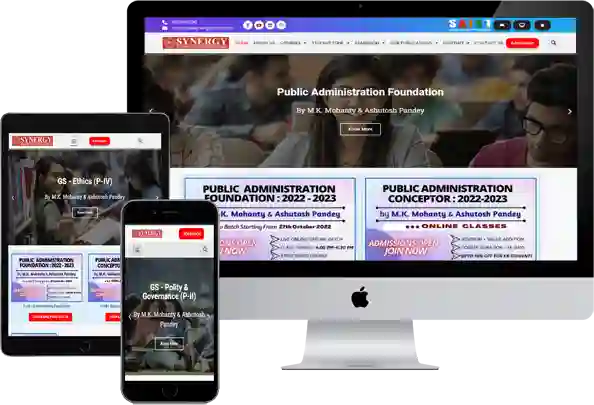
FOLLOW US ON
Facebook
Twitter
LinkedIn
Pinterest
WhatsApp
Skype
SEO Insights, Tips & Trends from Our Blog
Performance Marketing for Educational Institutes: A Complete Guide to Getting More Admissions in 2026
Scale Educational Admissions Using Performance Marketing Strategies Targeted Student Lead Generation Data-Driven Campaign Optimization High-Converting Ad Creatives Multi-Channel

Lead Generation for Coaching Institutes: Complete Data-Driven Guide (SEO, Ads, AI & Student Enrollment Strategy)
Fill Your Coaching Batches with Predictable Leads Data-driven student acquisition strategy SEO, Ads & AI combined High-intent enquiries,
Website Design for Coaching Institutes and Education Institutes in India — The Complete Guide (2026 Edition)
Your Coaching Website is Not a Brochure — It’s Your Admission Engine Why Coaching Websites Fail to Convert
UPSC Optional Subject Coaching Market Report 2026: Complete Data on All 25 Subjects, Market Size, Toppers, and Trends
UPSC Optional Coaching Market Report Every Institute Owner Must Read Real Market Size Behind Each Subject 25 Subjects
How Big is the UPSC Coaching Market in India: Official Data, Student Segments, Revenue Estimates, and Growth Trends (2026)
The Complete UPSC Coaching Market Guide for Institute Owners Real Market Numbers Most Owners Miss 6 Student Segments
Best Digital Marketing Agency for UPSC Coaching Institutes in India (2026 Guide)
Before You Hire Any Marketing Agency Read This UPSC Marketing Guide Why General Agencies Waste Your Budget The
Trusted and Affordable Digital Marketing Company in Delhi, India
- Latest Marketing Strategy
- Affordable Service Packages
- Improve User Experience
- Quality & Organic Traffic
- Transparent Progress Report
- Certified Professionals Expertise
Request a Quote
5/5 - (20 votes)


